


4 Axis Waterjet Mixing Chamber – KAD-DD31 Cutting Head Part
The KAD-DD31 4 Axis Waterjet Mixing Chamber is a metal cutting head component intended for compatible four-axis abrasive waterjet systems. Its cylindrical body features a lateral abrasive inlet and an axial opening associated with the cutting head flow path. The chamber allows abrasive particles to enter the high-velocity water stream before passing into the focusing tube. For maintenance and replacement applications, the original part dimensions, abrasive inlet orientation, and cutting head interfaces should be checked to identify a suitable replacement.
- Side Abrasive Inlet
- Compact Machined Body
- Cutting Head Fitment Review
- Drawing-Based OEM Supply
Share:


- Description
- Specification
- Application
- FAQS
Description – Abrasive Mixing Chamber Structure and Function
The KAD-DD31 mixing chamber is a component of the abrasive delivery section within a compatible waterjet cutting head. It is positioned between the upstream water orifice and the downstream focusing tube.
When high-pressure water passes through the orifice, a high-velocity jet is formed. The resulting low-pressure region draws abrasive particles through the chamber's lateral inlet. The particles become entrained in the water stream before entering the focusing tube, where further acceleration and focusing take place.
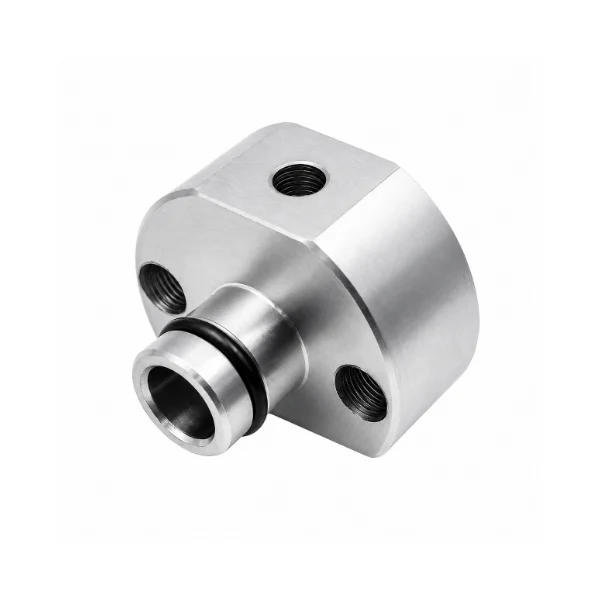
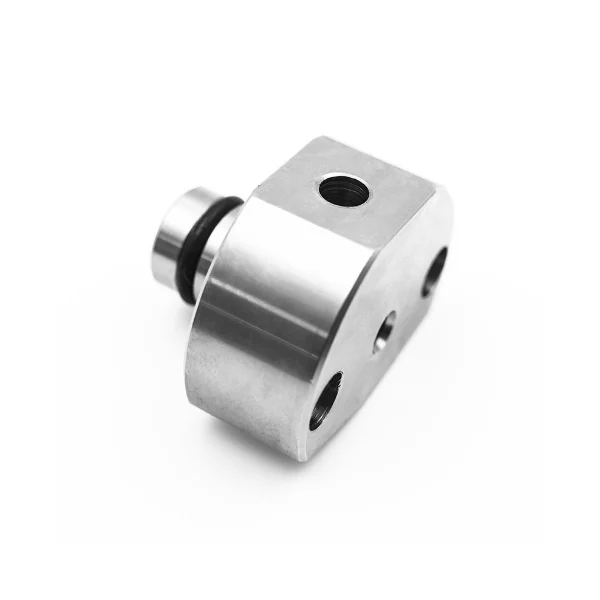
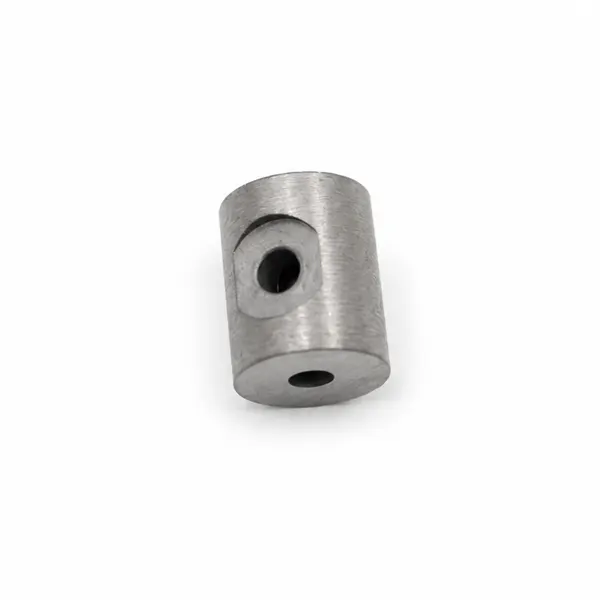
The KAD-DD31 component shown on this page has a compact cylindrical metal body with a side opening and a visible axial passage.
The external geometry, inlet configuration, and assembly interfaces are important when selecting a replacement for a particular four-axis cutting head.
Abrasive Inlet Orientation and Installation Fit
The lateral abrasive inlet is one of the main features to inspect when comparing mixing chambers.
Its position must correspond to the abrasive supply connection in the cutting head. An incorrect inlet orientation or incompatible connection geometry can prevent proper installation or interfere with the intended abrasive feed arrangement.
For four-axis cutting equipment, replacement selection should also account for the original cutting head assembly and the routing of nearby abrasive feed components.
Buyers should verify the following information before ordering:
- Abrasive inlet position and diameter
- Cylinder outside diameter and overall length
- Axial passage dimensions
- Mounting and contact surfaces
- Cutting head manufacturer and model
- Original component reference number
Mixing Chamber and Focusing Tube Interface
The mixing chamber, water orifice, and focusing tube are separate components within an abrasive cutting head.
The orifice generates the high-velocity waterjet, the chamber introduces abrasive particles, and the focusing tube directs the resulting abrasive stream.
These components must be correctly positioned relative to one another.
When replacing KAD-DD31, the existing orifice mount and focusing tube interface should be reviewed to confirm that the chamber fits the intended assembly.
Compact Cylindrical Component Design
The product image shows a machined metal cylinder with a recessed side inlet area and an axial opening.
The compact geometry allows the mixing chamber to be incorporated into a compatible cutting head assembly.
However, similar-looking mixing chambers may have different bore dimensions, inlet positions, material specifications, or installation interfaces.
Visual similarity alone should not be used as proof of compatibility.
Engineering Strength & Component Inspection
1. Abrasive Inlet Geometry
The location and dimensions of the abrasive inlet should correspond to the original cutting head design.
Important inspection points include the inlet opening, surrounding contact surface, and connection geometry.
2. Mounting Dimension Verification
The outside diameter, component length, axial openings, and installation surfaces should be checked against the original mixing chamber or approved drawing.
Matching these dimensions is necessary when evaluating replacement suitability.
3. Internal Passage and Wear Inspection
Abrasive movement can cause progressive erosion inside a mixing chamber.
The inlet passage and internal surfaces should be examined for excessive wear, deformation, damage, or accumulated debris during maintenance.
4. Orifice-to-Tube Alignment Review
Correct relative positioning of the orifice, mixing chamber, and focusing tube is important for the cutting head assembly.
When replacement parts are installed, the surrounding components should also be inspected for wear or alignment problems.
Why Choose KAD for 4-Axis Mixing Chamber Parts?
| Item | Specification |
|---|---|
| Product Code | KAD-DD31 |
| Product Type | 4-Axis Mixing Chamber |
| System Type | Waterjet Cutting Head |
| Function | Abrasive mixing & jet formation |
| Material | Stainless steel / wear-resistant alloy |
| Structure | Venturi mixing design |
| Operation | Continuous industrial use |
| Feature | High alignment stability |
| Application | Waterjet cutting systems |
1. Four-Axis Cutting Head Component Replacement
The KAD-DD31 mixing chamber can be considered for replacement applications involving compatible four-axis abrasive waterjet cutting heads.
Maintenance teams should compare the original part geometry and installation interfaces with the proposed replacement before ordering.
2. Abrasive Feed Connection Inspection
During waterjet cutting head maintenance, the mixing chamber inlet and abrasive feed connection may need inspection for blockage, wear, or damage.
The inlet configuration should also be checked when replacing components or reconnecting the abrasive supply hose.
3. Orifice and Focusing Tube Maintenance
The mixing chamber operates between the orifice and focusing tube.
When examining uneven abrasive delivery or cutting head wear, technicians should inspect these adjacent components rather than assuming the mixing chamber is the only possible cause.
4. Waterjet Cutting Head Rebuilding
Cutting head rebuilding may involve cleaning, inspecting, and replacing worn components.
The mixing chamber can be assessed for inlet erosion, internal passage damage, and compatibility with the surrounding assembly.
5. Industrial Replacement Parts Procurement
Waterjet equipment service providers, spare parts distributors, and industrial maintenance departments can use KAD-DD31 as a product reference when requesting a quotation.
Buyers should supply the original part information, required dimensions, and purchasing quantities for technical evaluation.
1. What is a 4 Axis Waterjet Mixing Chamber?
A 4 Axis Waterjet Mixing Chamber is a component used in compatible four-axis waterjet cutting heads. It allows abrasive particles to enter the high-velocity water stream before passing through the focusing tube. The four-axis designation refers to the machine configuration, not the chamber's movement.
2. Does a 4-axis mixing chamber provide better cutting accuracy than a 3-axis version?
Not necessarily. Cutting accuracy depends on the cutting head design, nozzle alignment, component condition, and machine control. The number of machine axes alone does not determine mixing chamber accuracy, performance, or wear resistance.
3. Why is abrasive inlet orientation important when replacing a mixing chamber?
The abrasive inlet must match the cutting head's feed connection and installation geometry. Incorrect inlet positioning can interfere with the abrasive hose connection or prevent proper installation. Buyers should verify the original inlet location and dimensions before ordering.
4. Can KAD-DD31 be used in both 4-axis and 5-axis waterjet cutting heads?
Compatibility depends on the cutting head model, chamber dimensions, and mounting interfaces. Although KAD-DD31 appears in both product listings, buyers should confirm the exact component specifications before using it in different waterjet cutting systems.
5. What should I inspect when abrasive suction becomes inconsistent?
Inspect the abrasive feed hose, inlet opening, water orifice, mixing chamber, and focusing tube for blockages, erosion, or damage. Inconsistent abrasive suction may result from worn components or incorrect assembly, so the entire abrasive delivery path should be checked.
6. What information is needed to order a replacement KAD-DD31 mixing chamber?
Provide the cutting head manufacturer, equipment model, original part number, component photographs, and dimensional drawings if available. Important details include abrasive inlet position, external dimensions, mounting interfaces, material requirements, and estimated order quantity.