


60K High Pressure Cylinder for Flow Intensifier Pump Maintenance
The 60K Intensifier High Pressure Cylinder is a key replacement component for maintenance and servicing of compatible waterjet intensifier systems. Selecting the correct part requires more than matching its general appearance. Equipment model, connection layout, overall dimensions, and operating specifications should all be reviewed to help ensure proper integration with the existing assembly. KAD supports replacement part identification based on customer drawings, reference numbers, or sample measurements.
- Replacement Support for Waterjet Intensifier Maintenance
- Connection Interface and Assembly Compatibility Checks
- Drawing-Based Dimension Comparison
- Technical Specification Review Before Ordering
Share:


- Description
- Specification
- Application
- FAQS
60K Intensifier High Pressure Cylinder: Structure and Function
The 60K Intensifier High Pressure Cylinder is a pressure-containing component used in compatible waterjet intensifier pump systems. It forms the high-pressure chamber where the reciprocating plunger pressurizes water and provides the housing for the associated high-pressure sealing components.
Correct cylinder selection depends on the pump model, rated pressure, internal bore dimensions, thread configuration and sealing arrangement. A similar external appearance does not necessarily mean that two cylinders are interchangeable.
KAD supplies waterjet intensifier replacement parts for industrial maintenance and repair applications. Customers can provide an original part number, pump model, engineering drawing or clear photographs to help verify the required configuration before ordering.
Cylinder Structure and Connection Interfaces
External Threaded Ends
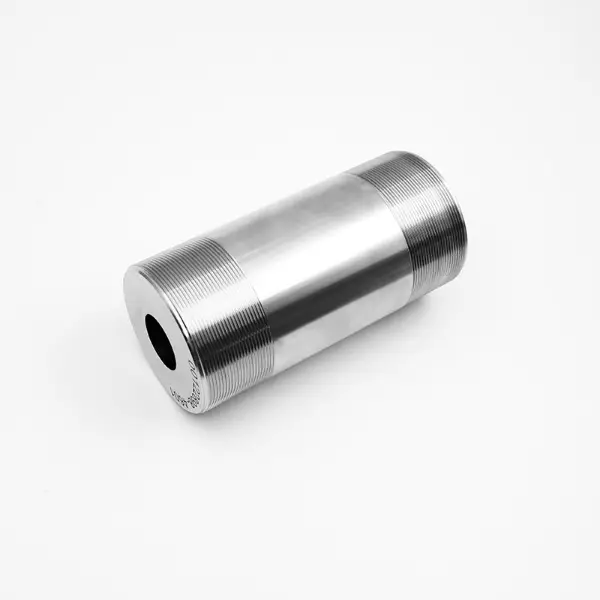
The illustrated high-pressure cylinder has a cylindrical metal body with external threads at both ends. These threaded interfaces connect with the corresponding components of the intensifier assembly.
Thread diameter, pitch, engagement length and end geometry should be checked against the original specification. Incorrect thread matching can prevent proper installation or compromise the intended connection.
Internal Bore and Sealing Interface
The internal bore and sealing areas are important functional features of a high-pressure cylinder. Their dimensions and surface condition must be suitable for the intended plunger and sealing components.
During replacement selection, buyers should verify the relevant bore dimensions, sealing arrangement and mating component specifications rather than relying on the external dimensions alone.
Pressure Class and Pump Compatibility
The 60K designation identifies the intended pressure class, but it does not establish compatibility with every waterjet intensifier operating at that pressure.
Different pump models and cylinder designs may have different internal dimensions, connection interfaces and pressure requirements. The original part number and equipment model should therefore be checked before a replacement is approved.
High-Pressure Cylinder Inspection and Maintenance
1. Thread Condition
Inspect both threaded ends for damaged threads, deformation, corrosion or signs of abnormal wear. The connection should match the specified mating component.
2. Internal Bore Condition
Check the bore and relevant sealing areas for visible damage, scoring or abnormal wear. Dimensional verification should follow the applicable engineering drawing or service specification.
3. Sealing Component Inspection
When investigating leakage or pressure-related problems, examine the associated high-pressure seals and mating components as well as the cylinder. A seal problem does not automatically mean that the cylinder itself requires replacement.
4. Structural Condition
Look for visible cracks, severe corrosion or other damage that could affect the component's integrity. Suspected structural damage requires professional evaluation before reuse.
5. Replacement Verification
Before installation, compare the replacement cylinder with the original part specification, including the pressure rating, overall dimensions, internal bore and thread details. Follow the equipment manufacturer's maintenance and depressurization procedures.
Why Choose KAD for High-Pressure Cylinder Replacement?
| Item | Specification |
|---|---|
| Product Type | Waterjet High Pressure Cylinder |
| System Compatibility | Flow Waterjet Cutting Machine |
| Function | Ultra-high pressure containment |
| Working Pressure | Up to 60,000 PSI / 420MPa |
| Application | Waterjet intensifier pump system |
| Main Materials | Alloy steel / Stainless steel |
| Precision Level | High-accuracy CNC machining |
| Replacement Type | OEM compatible parts |
Waterjet Intensifier Pump Maintenance
Used as a replacement component during maintenance of compatible waterjet intensifier systems.
High-Pressure Cylinder Replacement
Suitable for replacement projects where the existing cylinder's dimensions, pressure class and connection interfaces have been verified.
Intensifier Overhaul
Relevant to pump overhaul work involving inspection of the cylinder, plunger, high-pressure seals and related components.
Industrial Spare Parts Distribution
Suitable for B2B distributors and service providers sourcing replacement cylinders for supported waterjet equipment.
Custom Replacement Projects
KAD can review customer-supplied samples, drawings and technical specifications to assess the feasibility of producing a matching replacement component.
1. What does a high-pressure cylinder do in a waterjet intensifier?
The high-pressure cylinder forms the chamber in which the reciprocating plunger pressurizes water. It also accommodates the associated high-pressure sealing components.
2. Is every 60K high-pressure cylinder interchangeable?
No. Cylinders may differ in bore dimensions, thread specifications, sealing arrangements and pump compatibility. Confirm the original part number and equipment model before ordering.
3. What information is needed to identify a replacement cylinder?
The most useful information includes the pump manufacturer and model, original part number, rated pressure, overall dimensions, thread specifications and an engineering drawing or clear photographs.
4. Does water leakage always mean the cylinder is damaged?
No. Leakage may result from worn seals, damaged mating components, incorrect installation or other system problems. The cylinder and related sealing components should be inspected together.
5. How can I check whether a replacement cylinder fits my pump?
Compare the replacement with the original specification, paying attention to pressure class, internal bore, thread diameter and pitch, overall dimensions and sealing interfaces. Visual similarity alone is insufficient.
6. Can KAD review a cylinder based on a sample or drawing?
Customers can provide a sample, drawing or original part information for technical review. Manufacturing feasibility, material grade, critical dimensions and compatibility should be confirmed before production.