


Abrasive Waterjet Ruby Orifice – Disc-Style Jewel Insert
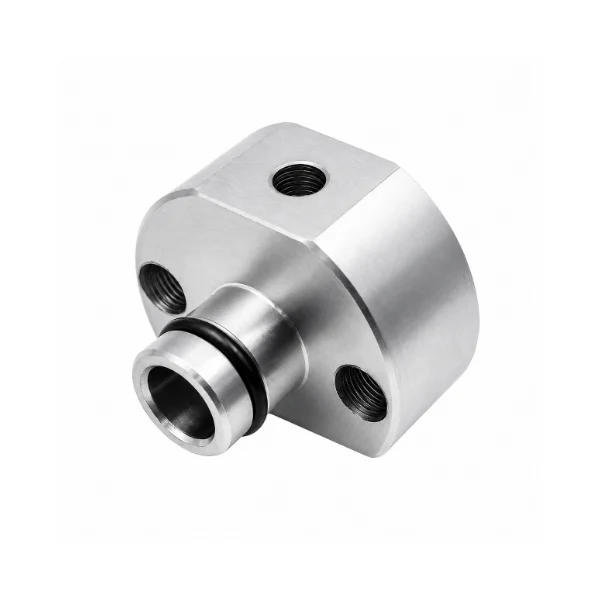
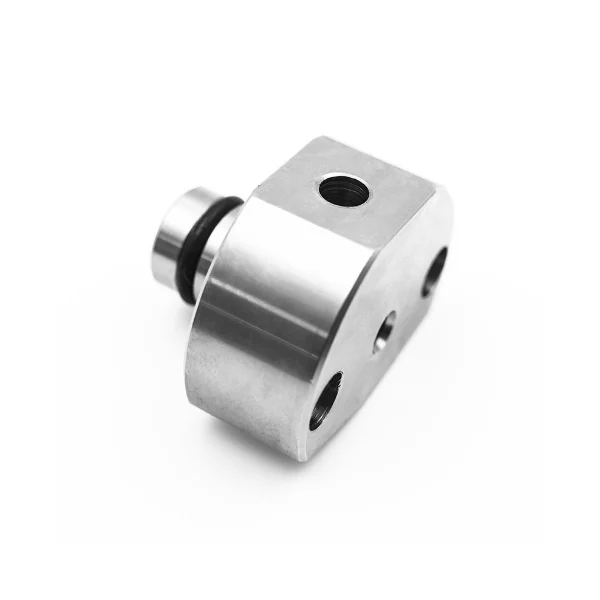
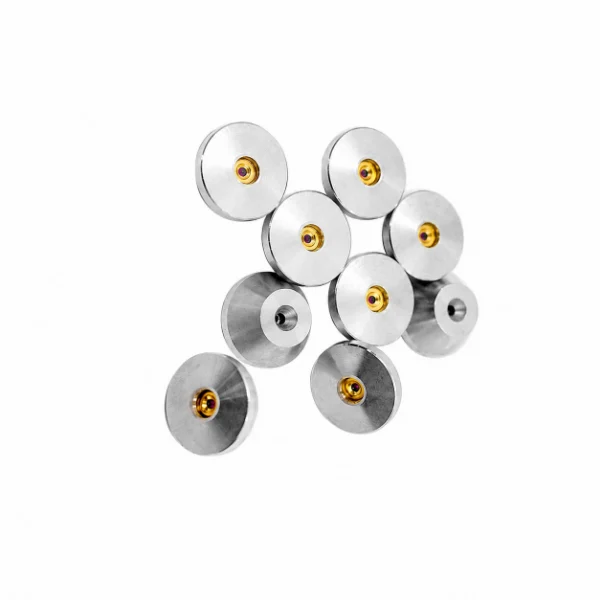
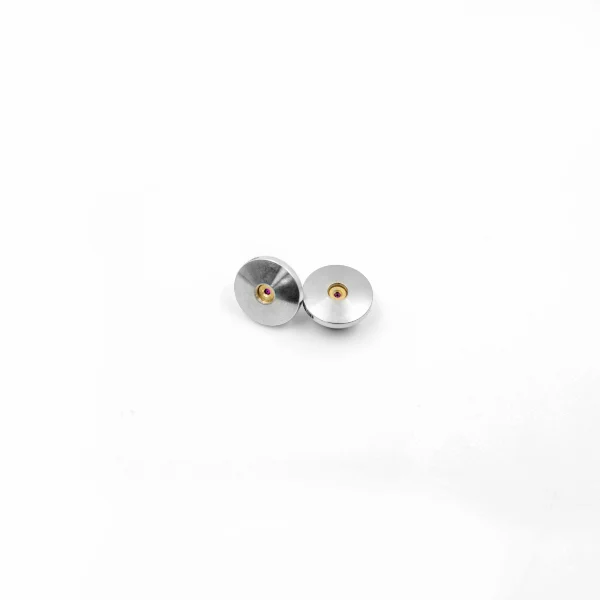
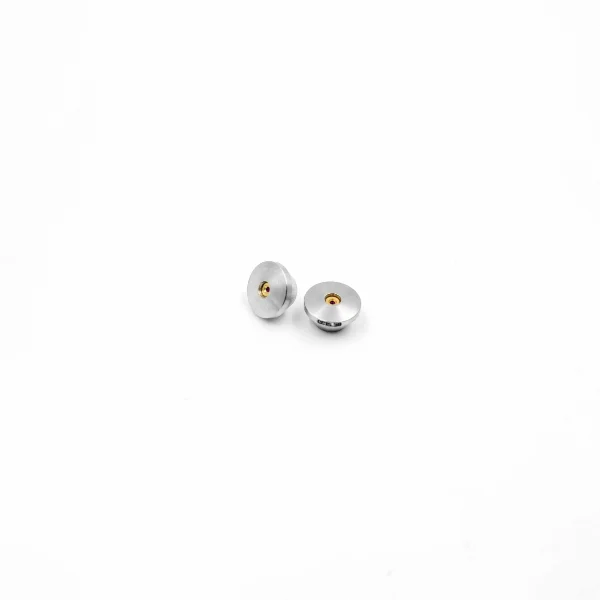
The Abrasive Waterjet Ruby Orifice is a jewel component for compatible cutting heads. However, it is housed in a disc-like metal structure that has a small aperture which is made of ruby, and a small stream of high-velocity water that cuts into the aperture is created prior to the introduction of high-velocity abrasive into the mixing chamber. The images of the product indicate a circular body that has a central area for jewel mounting. When choosing them for replacement selection, the buyer must verify the aperture diameter, housing dimensions, orifice seat, cutting head model and matching focusing tube configuration.
- Compact Disc-Style Housing
- Precision Ruby Jewel Aperture
- Waterjet Formation Before Abrasive Mixing
- Orifice and Focusing Tube Matching
Share:


- Description
- Specification
- Application
- FAQS
Description – Ruby Orifice Position in an Abrasive Cutting Head
In an abrasive waterjet cutting head, the ruby orifice is positioned upstream of the abrasive mixing chamber.
Its small jewel aperture forms the initial high-velocity water stream, which travels into the mixing chamber and interacts with abrasive particles supplied through a separate abrasive inlet.
The resulting abrasive-water stream then passes through the focusing tube before reaching the workpiece.
The KAD product photographs show compact, disc-style orifice components with circular metal housings and central jewel mounting areas.
Unlike extended-stem orifices, this product has a short, compact housing profile. However, its exact mounting classification and interchangeable part numbers must be confirmed.
When selecting a replacement, the orifice aperture, housing geometry, mixing chamber interface, and focusing tube configuration must be considered together.
Water Stream Formation Before Abrasive Mixing
The ruby orifice is responsible for forming the primary high-speed water stream.
High-pressure water passes through the jewel aperture and enters the downstream cutting head components.
In a typical abrasive cutting arrangement, the water stream generates the conditions required for abrasive particles to enter the mixing region.
The abrasive is introduced downstream of the ruby orifice rather than through the jewel aperture itself.
This distinction is important when diagnosing jet formation problems and abrasive delivery issues.
An incorrectly sized or damaged orifice may affect the water stream entering the mixing chamber, but cutting performance also depends on the condition and configuration of the downstream parts.
Abrasive Cutting Head Setup Checklist
When replacing a ruby orifice in an abrasive cutting head, review the complete nozzle configuration rather than selecting the jewel by appearance alone.
| Component or Parameter | What to Confirm | Why It Matters |
|---|---|---|
| Ruby Orifice | Fixed aperture diameter and housing type | Determines the selected initial waterjet opening |
| Orifice Seat | Mounting profile and mating surfaces | Helps identify the correct mechanical interface |
| Mixing Chamber | Model, inlet condition, and component fit | Relates to the downstream waterjet and abrasive entry arrangement |
| Focusing Tube | Inside diameter, length, and compatible model | Must match the approved abrasive cutting configuration |
| Abrasive Feed | Feed tube, inlet condition, and equipment settings | Influences abrasive delivery into the mixing region |
| High-Pressure Water Supply | Approved operating pressure and filtration | Provides the required upstream operating conditions |
All specifications should be verified against the intended cutting head and original equipment documentation.
Engineering Inspection and Jet Quality Checks
1. Jewel Aperture Size Verification
The specified ruby aperture diameter should correspond to the required cutting head configuration.
The product listing identifies a range of aperture sizes, but each supplied orifice must be matched to a particular fixed diameter.
Suitable inspection procedures should confirm the specified aperture dimensions and visible opening condition.
2. Housing and Seating Surface Inspection
The compact metal housing must match the receiving seat of the intended cutting head.
Important inspection points include the housing outside diameter, overall thickness, contact surfaces, and visible damage.
Critical dimensional requirements should follow the approved product drawing.
3. Jewel Surface and Cleanliness Review
The jewel mounting area and visible aperture should be examined for chips, contamination, and other defects identified by the manufacturer's inspection procedures.
Cleanliness is important when handling small precision waterjet components.
Any polishing, cleaning, or inspection process should follow the applicable product requirements.
4. Downstream Component Condition Review
A correct orifice cannot compensate for every problem elsewhere in the cutting head.
During maintenance, the condition of the mixing chamber, abrasive inlet, and focusing tube should also be reviewed.
The complete component arrangement should be compared with the original equipment specifications before replacement parts are selected.
Why Choose KAD for Abrasive Cutting Head Orifices?
| Item | Specification |
|---|---|
| Product Type | Ruby Orifice |
| System Type | Abrasive Waterjet Cutting Head Machine |
| Function | High-pressure jet formation |
| Cutting Type | Abrasive waterjet cutting |
| Material | Ruby (synthetic crystal) |
| Aperture Size | 0.08 – 0.4 mm (micro precision range) |
| Working Pressure | Up to 60,000 PSI / 420MPa |
| Manufacturing Process | Micro-drilling + optical polishing |
| Application | Industrial waterjet cutting systems |
1. Abrasive Cutting Head Configuration
Ruby orifices are used in compatible abrasive waterjet cutting heads to form the water stream before abrasive is introduced.
The selected aperture must correspond to the machine's approved pump and nozzle arrangement.
2. Orifice and Focusing Tube Replacement Planning
When preparing replacement parts, maintenance teams should identify both the ruby orifice size and the focusing tube specification.
The required combination depends on the original cutting head configuration, not simply the outside appearance of either component.
3. Abrasive Entrainment Troubleshooting
If abrasive delivery becomes irregular, technicians may need to inspect the orifice, mixing chamber, abrasive feed passage, and focusing tube.
A damaged or incorrectly installed orifice is one possible factor, but abrasive feed faults can have several other causes.
Diagnosis should follow the equipment manufacturer's maintenance instructions.
4. Nozzle Stack Inspection During Maintenance
During cutting head servicing, the ruby orifice and associated downstream components may require inspection for damage, contamination, or unsuitable fit.
A replacement should match the original seat, aperture specification, and approved nozzle arrangement.
5. Multi-Head Waterjet Spare Parts Procurement
Industrial waterjet operators and parts distributors may maintain replacement stocks for different cutting head configurations.
Recording the exact aperture diameter, housing type, compatible cutting head, and associated focusing tube model can help reduce selection errors when ordering multiple variants.
1. Does abrasive pass through the ruby orifice in an abrasive waterjet cutting head?
No. In a typical abrasive waterjet cutting head, high-pressure water passes through the ruby jewel aperture to form the initial water stream. Abrasive particles are introduced downstream through a separate feed passage into the mixing chamber. The combined abrasive-water stream then travels through the focusing tube.
2. How should a ruby orifice be matched with a focusing tube?
The correct combination should follow the cutting head manufacturer's approved setup. Buyers need to confirm the ruby orifice aperture diameter, focusing tube inside diameter and length, operating pressure, and other relevant system requirements. A single universal size ratio should not be assumed for every cutting head.
3. Can a damaged ruby orifice affect abrasive waterjet cutting performance?
Yes. A chipped, worn, contaminated, or incorrectly seated orifice may affect the water stream entering the mixing chamber. However, irregular cutting performance can also involve the focusing tube, abrasive feed system, water supply, or other cutting head parts. The complete system should be inspected before identifying the cause.
4. Should the mixing chamber and focusing tube be inspected when replacing a ruby orifice?
Yes. These components work together in the abrasive cutting head, and wear or damage downstream of the orifice may affect jet alignment and cutting performance. Technicians should check the mixing chamber inlet, focusing tube bore, and relevant connection surfaces according to the original equipment maintenance procedures.
5. Can this compact ruby orifice replace a long stem ruby orifice?
Not without confirming compatibility. The product shown here has a compact disc-style housing, while long stem orifices have an extended metal stem and different mounting geometry. Even if the jewel aperture diameter is identical, the housing, seat, and installation requirements may differ.
6. What information is required to order an abrasive waterjet ruby orifice?
Please provide the cutting head manufacturer and model, original orifice part number, required jewel aperture diameter, housing dimensions, and relevant focusing tube specifications. Component photographs, an existing sample, and estimated purchasing quantity can help KAD review the required replacement configuration.