


Abrasive Hopper – KAD-TY101 Transparent Reservoir Assembly
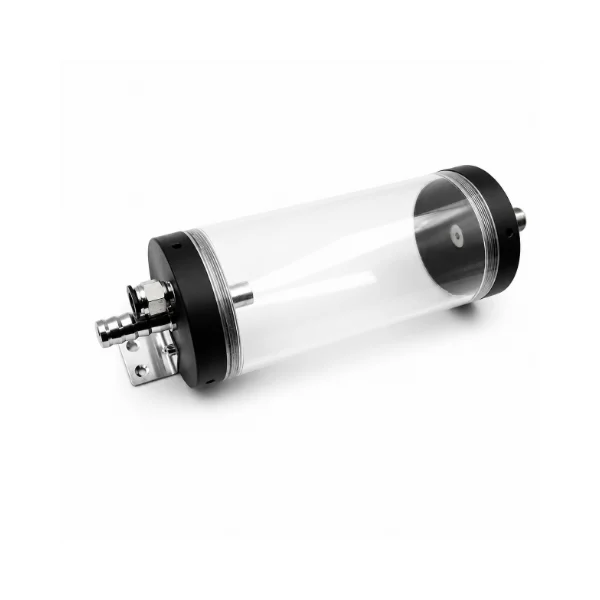
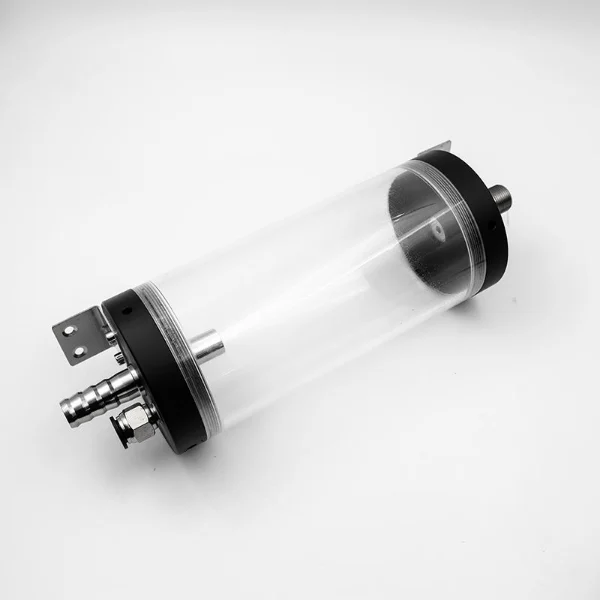
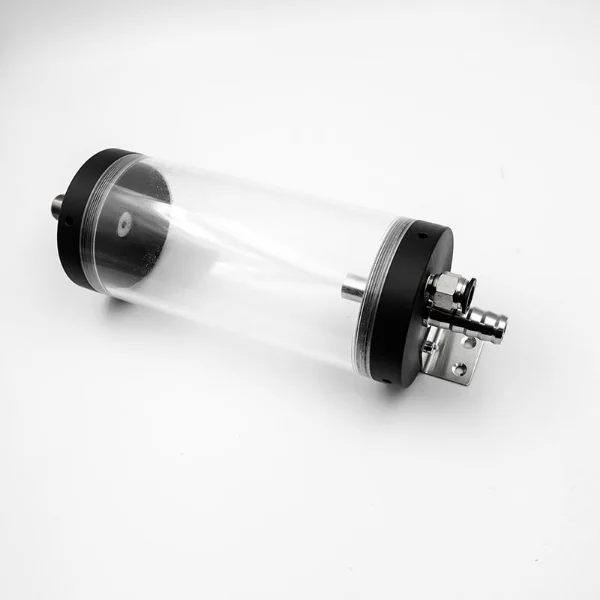
The KAD-TY101 Abrasive Hopper is a small, clear reservoir package designed for compatible water jet abrasive feeding systems. Has clear cylindrical chamber, black end caps, metal hose fittings and mounting brackets. The assembly affords a visible chamber in the device applicable to the abrasive supply means. The buyer is expected to check the original equipment's model prior to ordering for replacement, check the installation requirements, the size of the reservoirs, and the connection of the fittings, etc.
- Transparent Reservoir Chamber
- Dual-End Cap Construction
- Metal Hose Connection Fittings
- Compact Mounting Brackets
Share:


- Description
- Specification
- Application
- FAQS
Description – Transparent Hopper Structure and Components
The KAD-TY101 abrasive hopper is a transparent cylindrical component associated with the abrasive supply system of a compatible waterjet cutting machine.
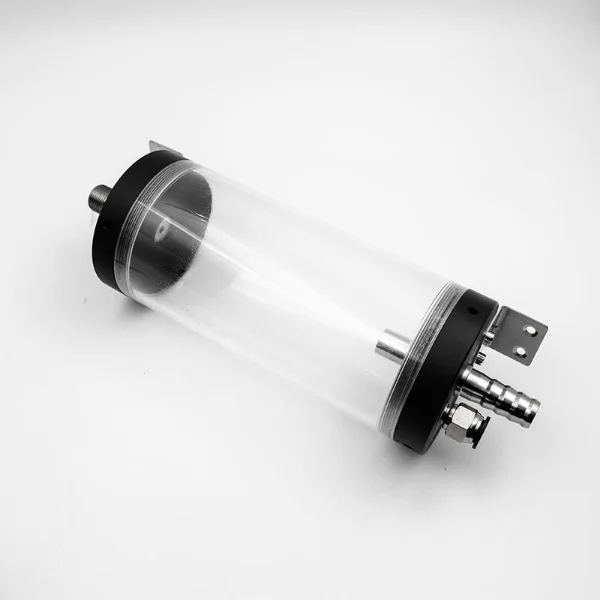
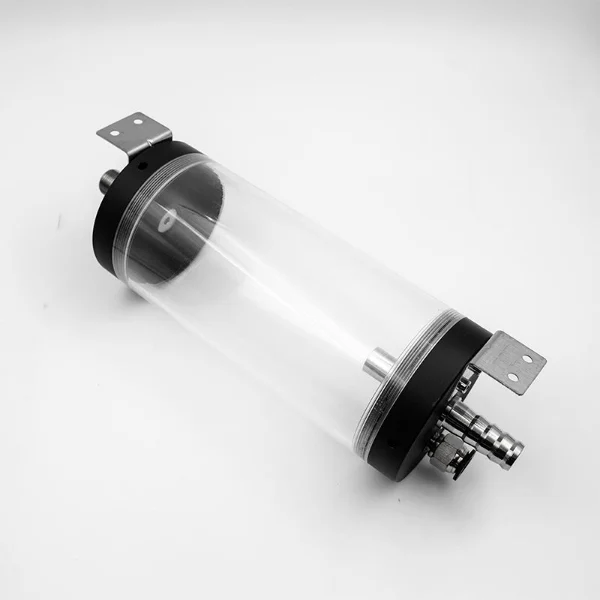
The assembly shown in the product photographs consists of a clear tube positioned between two black end caps. Metal connection fittings and mounting tabs are attached to the end components.
Unlike a large industrial abrasive storage tank, this compact assembly is intended for equipment configurations requiring a smaller reservoir component.
Its transparent construction allows the chamber interior to be observed without removing the outer housing.
When evaluating replacement suitability, buyers should confirm the reservoir dimensions, end connection layout, mounting bracket positions, and relevant equipment specifications.
Clear Cylindrical Reservoir
The main visible feature of KAD-TY101 is its transparent cylindrical chamber.
The clear body allows users to observe the internal condition of the reservoir and identify visible contamination or damage.
The actual material grade, internal capacity, operating requirements, and permissible abrasive loading must be confirmed using the approved product specifications.
For replacement applications, the chamber's outside diameter, length, and end connection geometry are important dimensions.
End Caps and Hose Connections
The reservoir has black end components with metal fittings extending from the assembly.
The product photographs show a hose-barb-style connection and other metal connection features. Their exact functions and specifications must be confirmed against the original equipment arrangement.
Connection compatibility depends on fitting diameter, connection type, component orientation, and the dimensions of the mating parts.
Customers should compare the original hopper's fittings and end-cap arrangement before purchasing a replacement.
Mounting Brackets and Installation Fit
Metal mounting tabs are visible near the end caps of the KAD-TY101 assembly.
These components are relevant to the mechanical installation of the hopper within the intended equipment.
Important installation considerations include bracket orientation, mounting hole dimensions, bracket spacing, and surrounding clearance.
A replacement reservoir should be selected according to its installation requirements rather than visual similarity alone.
Abrasive Hopper vs. Abrasive Control Valve
The abrasive hopper and abrasive control valve perform different functions within a waterjet abrasive supply arrangement.
The hopper provides a reservoir component, while a control valve is responsible for enabling or interrupting abrasive delivery where the system design includes that function.
The downstream feed system transfers abrasive toward the cutting head, where the mixing chamber introduces abrasive into the high-velocity waterjet.
KAD-TY101 should therefore be identified as a hopper or reservoir assembly, not as a complete electrically controlled abrasive feeding system.
Engineering Strength & Component Inspection
1. Transparent Reservoir Inspection
The cylindrical chamber should be inspected for cracks, surface deterioration, discoloration, and other visible damage.
Dimensions and material requirements must correspond to the approved product specification.
2. End Cap and Connection Inspection
The end caps and attached metal fittings should be checked for damage, incorrect positioning, and compatibility with their mating components.
Any associated seals should be inspected according to the equipment manufacturer's maintenance instructions.
3. Mounting Bracket Verification
Mounting hole positions, bracket spacing, and bracket orientation are important when comparing replacement assemblies.
The hopper should match the intended mounting location without requiring unapproved modifications to surrounding equipment.
4. Assembly Condition and Dimensional Review
The complete assembly should be inspected for visible damage, loose components, and dimensional differences from the original part.
Replacement suitability should be verified against the original equipment requirements and approved technical drawings.
Why Choose KAD for Abrasive Hopper Parts?
| Item | Specification |
|---|---|
| Product Code | KAD-TY101 |
| Product Type | Abrasive Hopper / Sand Bucket |
| System Type | Waterjet Cutting Machine |
| Function | Abrasive storage and feeding |
| Material | Reinforced steel / industrial-grade polymer |
| Feeding Mode | Gravity / pneumatic assisted |
| Operation Mode | Continuous industrial supply |
| Feature | Stable abrasive flow delivery |
| Application | Abrasive waterjet cutting systems |
1. Waterjet Abrasive Reservoir Replacement
The KAD-TY101 hopper can be evaluated for replacing a compatible transparent reservoir component in an abrasive waterjet supply system.
Buyers should verify the original reservoir dimensions, end-cap arrangement, fittings, and mounting configuration before purchasing.
2. Transparent Chamber Maintenance
The transparent chamber can be visually inspected during equipment maintenance.
Technicians should check for cracks, contamination, damaged connections, or other visible conditions that could affect the assembly.
3. Hose Connection and End Cap Inspection
The hopper includes metal connection fittings attached to its end components.
Maintenance may involve checking the condition of these fittings, their mating connections, and associated sealing elements.
4. Hopper Mounting and Assembly Replacement
The assembly includes mounting brackets that should match the intended equipment installation.
When replacing the component, the bracket positions, mounting holes, overall length, and surrounding equipment clearance should be confirmed.
5. Industrial Waterjet Spare Parts Procurement
Waterjet equipment repair companies and industrial distributors can use the existing product photographs, technical drawings, and dimensional information to request matching hopper components.
Providing complete replacement information helps KAD review the requested configuration and purchasing quantity.
1. What is an Abrasive Hopper in a waterjet cutting system?
An Abrasive Hopper is a component used to hold abrasive material within a waterjet feeding arrangement. Depending on the equipment design, hoppers can range from large storage tanks to compact reservoirs. The KAD-TY101 assembly shown here features a transparent cylindrical chamber, end caps, and connection fittings.
2. What is the difference between a compact abrasive hopper and a bulk abrasive hopper?
A compact abrasive hopper is a smaller reservoir component intended for a particular equipment configuration, while a bulk abrasive hopper is designed for storing larger quantities of abrasive material. Their capacities, installation arrangements, and feeding mechanisms can differ significantly, so buyers should confirm the actual equipment requirements.
3. What is the purpose of the transparent chamber on KAD-TY101?
The transparent cylindrical chamber allows the interior of the reservoir to be visually observed without removing the housing. This can help during routine inspection and component identification. Its exact material, storage capacity, and operating limitations should be confirmed using the approved technical specifications.
4. Can KAD-TY101 replace the KAD-AP19 abrasive hopper?
Compatibility cannot be confirmed from the product names or photographs alone. The two website listings show different component configurations, including their end fittings and attached hardware. Customers should compare the original equipment model, installation dimensions, and connection requirements before selecting a replacement.
5. What should I inspect before replacing an abrasive hopper?
Inspect the transparent chamber, end caps, connection fittings, mounting brackets, and any associated seals for visible damage. The replacement component should match the required length, diameter, connection sizes, mounting positions, and original equipment specifications.
6. What information is needed to order a KAD-TY101 abrasive hopper?
Provide the original equipment model, component reference, clear photographs, reservoir dimensions, hose fitting specifications, mounting measurements, and expected order quantity. Technical drawings or a reference sample can help KAD evaluate replacement compatibility and custom manufacturing requirements.