


Long Stem Ruby Orifice – Precision Waterjet Jewel Insert
Long Stem Ruby Orifice is a precision formed jet for use with compatible waterjet cutting heads. It is a long, stick-like metal stem that has a small jewel hole in it through which high-pressure water flows and a tapered housing end. The aperture sizes and dimensions must correspond to the cutting head configuration that you want to use. KAD provides long stem ruby orifice parts for industrial replacement needs based on the original part number, aperture diameter, geometry of stem, and seating dimensions.
- Extended Metal Stem Design
- Precision Ruby Jewel Aperture
- Tapered Orifice Housing
- Multiple Aperture Size Options
Share:


- Description
- Specification
- Application
- FAQS
Description – Long Stem Ruby Orifice Structure and Function
The long stem ruby orifice is a jewel orifice component used to form a high-velocity water stream in compatible waterjet cutting heads.
A small precision aperture controls the passage of pressurized water through the orifice. In an abrasive waterjet system, the resulting water stream passes toward the mixing chamber, where abrasive particles are introduced downstream.
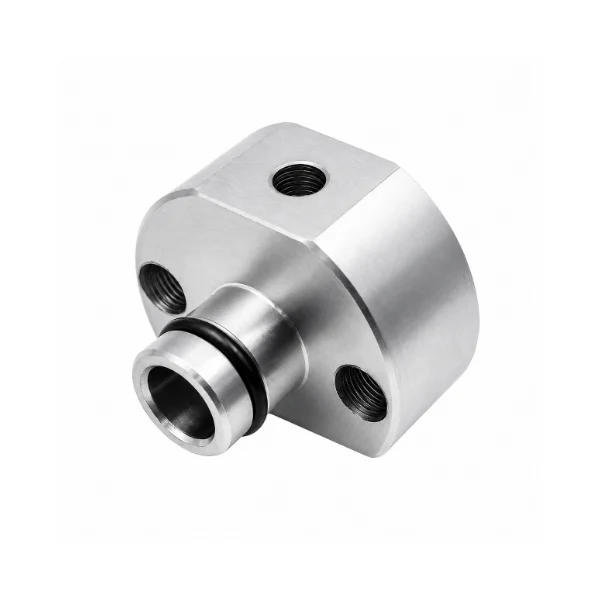
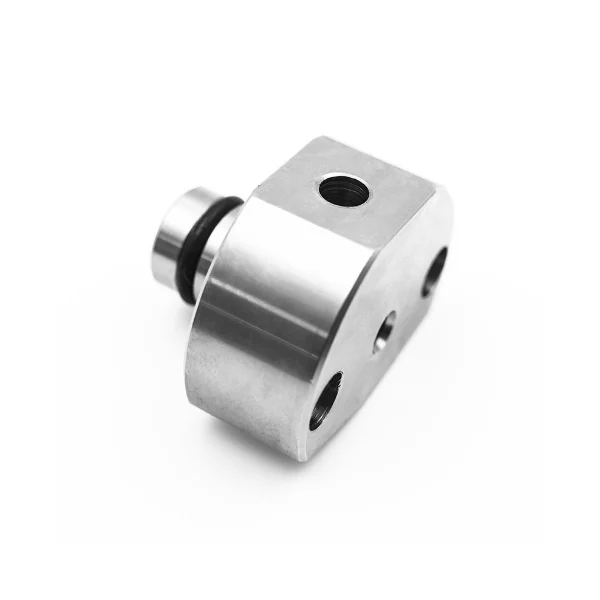
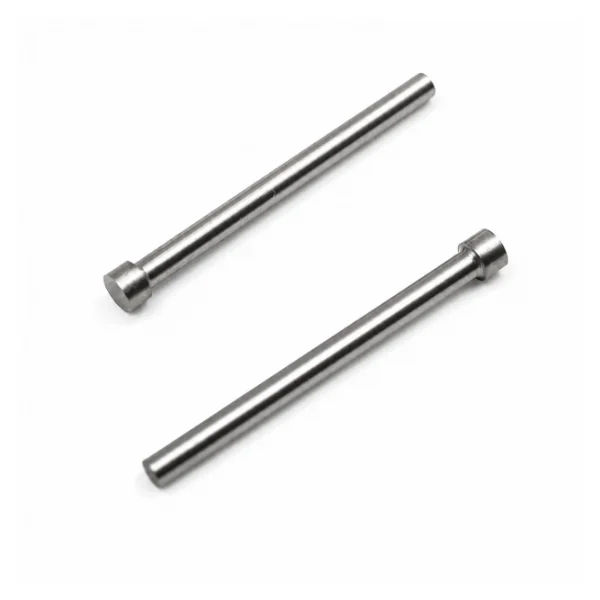
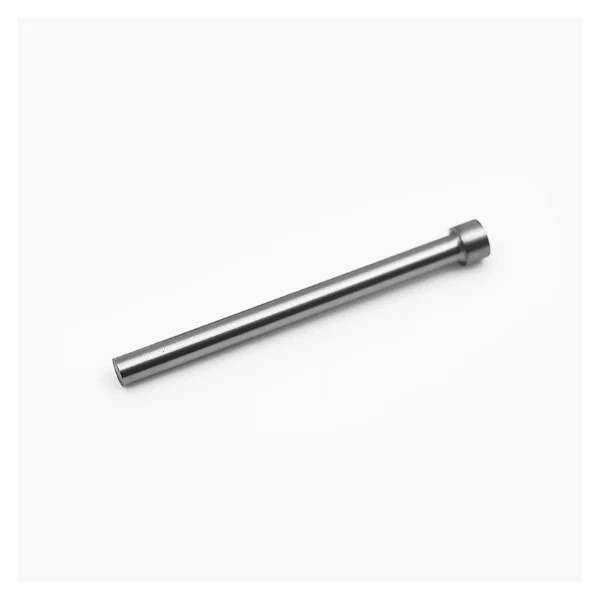
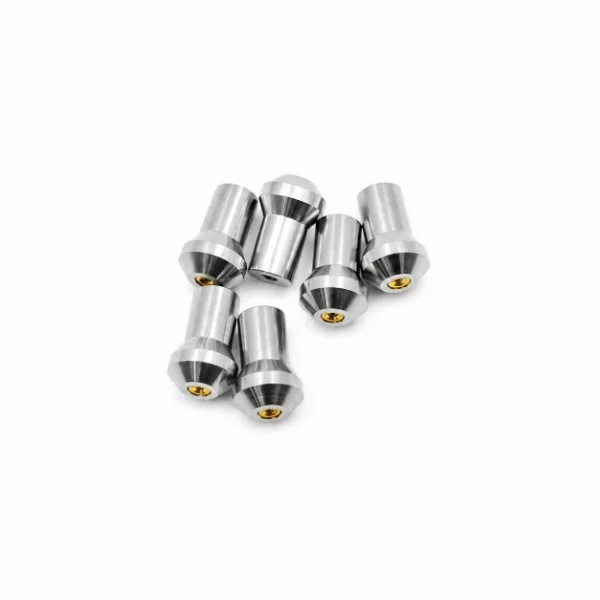
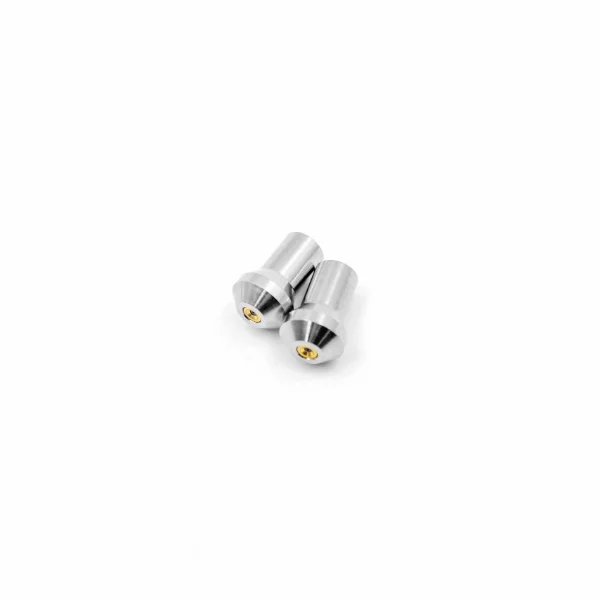
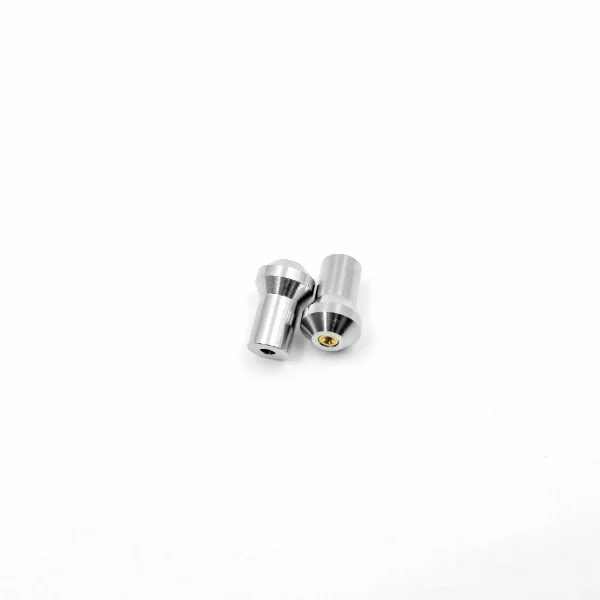
The KAD product photographs show an extended cylindrical metal housing with a tapered end and a circular jewel mounting area.
The long stem design identifies a particular orifice mounting configuration. It must be matched to the correct receiving seat and cutting head arrangement.
Unlike a focusing tube or mixing chamber, the ruby orifice is located at the upstream jet-forming stage.
Buyers should select the appropriate aperture diameter and housing dimensions according to their original equipment requirements.
Extended Metal Stem and Tapered Housing
The distinguishing feature of this product is its extended cylindrical stem.
The photographs show a metal housing consisting of a straight cylindrical section and a wider tapered head.
The specific geometry of the stem and tapered section is relevant to how the orifice fits within a compatible holder.
Important identification dimensions include:
- Overall orifice length
- Stem outside diameter
- Straight stem length
- Tapered head diameter
- Taper and seating geometry
- Position of the jewel aperture
These measurements should be compared with the original orifice or an approved dimensional drawing.
A long stem orifice should not be substituted for a short stem or another mounting style based solely on aperture size.
Ruby Jewel Aperture and Size Selection
The jewel aperture is the precision opening through which pressurized water flows.
Its diameter is an important specification for waterjet system setup and component selection.
The KAD product listing indicates an aperture range of 0.08–0.4 mm. However, the actual sizes offered within this range should be confirmed before ordering.
Each individual orifice has a specified aperture diameter.
For a replacement order, customers should identify the original orifice size and confirm that it is appropriate for the intended waterjet system configuration.
The jewel material is listed as synthetic ruby in the existing product information.
The exact aperture size, jewel mounting method, and dimensional tolerances must be confirmed through the approved product specifications.
Seating Geometry and Mounting Dimensions
Correct orifice installation depends on the relationship between the metal housing, jewel assembly, and the designated mounting seat.
The orifice must fit the original cutting head configuration without incompatible dimensions or damaged contact surfaces.
Relevant fitment information includes the stem diameter, overall length, tapered seating geometry, and original holder requirements.
The product photographs do not establish the exact sealing design or compatible manufacturer part numbers.
Customers should therefore confirm these specifications before selecting a replacement.
Long Stem vs. Short Stem Ruby Orifices
Long stem and short stem orifices differ primarily in their housing and mounting geometry.
The required stem length depends on the original cutting head or orifice holder design.
A longer stem does not automatically provide better cutting accuracy, less vibration, or longer service life in every machine.
The correct selection depends on aperture size, mounting dimensions, seating requirements, and equipment compatibility.
When replacing an existing orifice, the specified mounting type should be maintained unless an approved alternative is available.
Ruby Orifice vs. Focusing Tube
The ruby orifice and focusing tube are separate components within an abrasive waterjet cutting head.
The ruby orifice forms the initial high-velocity water stream.
After abrasive is introduced in the mixing chamber, the abrasive-water stream travels through the focusing tube.
The two components have different construction, installation requirements, and maintenance considerations.
A long stem ruby orifice should not be identified as a mixing tube or abrasive nozzle.
Engineering Strength & Component Inspection
1. Jewel Aperture Verification
The specified aperture diameter is a critical product parameter.
Inspection requirements should address aperture size, opening geometry, and visible edge condition using suitable precision measuring equipment.
Acceptance criteria must follow the approved orifice specification.
2. Stem Diameter and Length Inspection
The metal stem must correspond to the original mounting arrangement.
Relevant dimensions include overall length, cylindrical diameter, straight-section length, and the position of the tapered head.
These should be compared against the approved drawing or a verified reference component.
3. Jewel and Seating Surface Inspection
The jewel mounting area and applicable contact surfaces should be inspected for visible damage, contamination, or dimensional defects.
Any required surface finish or seating tolerances must be established from the original equipment specifications.
Correct handling and cleanliness are important during component inspection and installation.
4. Material and Replacement Specification Review
The existing KAD listing identifies synthetic ruby, precision micro-hole processing, and optical finishing as product characteristics.
For a specific order, customers should confirm the jewel specification, housing material, aperture size, dimensional requirements, and inspection records where applicable.
Pressure compatibility and component interchangeability should be supported by verified product documentation.
Why Choose KAD for Long Stem Ruby Orifices?
| Item | Specification |
|---|---|
| Product Type | Long Stem Ruby Orifice |
| System Type | Waterjet Cutting Machine |
| Function | High-pressure jet formation |
| Cutting Type | Pure / abrasive waterjet |
| Material | Synthetic ruby crystal |
| Structure | Long stem precision design |
| Aperture Range | 0.08 – 0.4 mm |
| Working Pressure | Up to 60,000 PSI / 420MPa |
| Manufacturing Process | Micro-drilling + optical polishing |
| Application | Industrial waterjet cutting systems |
1. Waterjet Cutting Head Orifice Replacement
The long stem ruby orifice can be evaluated as a replacement for a compatible waterjet cutting head component.
The selected part must match the original aperture diameter, stem configuration, seating geometry, and mounting requirements.
2. Jewel Aperture Size Selection
Different waterjet setups may require different orifice aperture sizes.
Buyers should verify the required diameter using the original equipment specifications and approved cutting head configuration.
An orifice should not be selected solely according to the material being cut.
3. Orifice Holder and Stem Fitment Inspection
During maintenance or replacement, the condition and dimensions of the orifice holder and the original stem should be reviewed.
Incorrect stem length or seating geometry can prevent the component from fitting correctly.
Installation must follow the equipment manufacturer's instructions.
4. Orifice Wear and Jet Quality Investigation
A worn, chipped, blocked, or damaged orifice may affect jet formation.
Technicians should inspect the jewel aperture, surrounding surfaces, seating condition, and relevant upstream water filtration components according to the equipment manufacturer's procedures.
The complete cutting head should be evaluated before attributing a jet quality problem to the orifice alone.
5. Waterjet Spare Parts Distribution and Procurement
Industrial spare parts distributors and waterjet service companies may require long stem ruby orifices in specific aperture sizes.
Providing original part numbers, stem dimensions, equipment models, and order quantities helps clarify the required replacement configuration.
1. What is a Long Stem Ruby Orifice?
A Long Stem Ruby Orifice is a waterjet jet-forming component with an extended metal housing and a small ruby jewel aperture. It is used in compatible cutting heads to create a high-velocity water stream. The correct replacement must match the original aperture size, stem dimensions, and seating configuration.
2. What is the difference between a long stem and short stem ruby orifice?
Long stem and short stem ruby orifices have different metal housing and mounting dimensions. Their suitability depends on the receiving holder, seating geometry, and original cutting head design. A long stem is not automatically superior in performance, and the two styles should not be treated as interchangeable without equipment-specific verification.
3. How do I select the correct ruby orifice aperture size?
Start with the aperture diameter specified for the original equipment configuration. The required size depends on the waterjet system, cutting head setup, and relevant operating specifications. KAD lists a product range of 0.08–0.4 mm, but buyers should confirm the exact available fixed-diameter variants before ordering.
4. Can a long stem ruby orifice replace a sapphire or diamond orifice?
A material substitution may be possible only when the replacement matches the approved mounting configuration, aperture diameter, dimensions, and equipment requirements. Ruby, sapphire, and diamond orifices are offered in different product designs and should not be assumed to be interchangeable merely because their aperture sizes are similar.
5. What are common reasons for replacing a waterjet ruby orifice?
Replacement may be necessary when inspection identifies aperture damage, edge deterioration, blockage that cannot be addressed through approved maintenance procedures, or other defects that affect jet formation. Abnormal jet quality may also involve filtration, pressure supply, alignment, and downstream cutting head components, so the full system should be evaluated before replacing the orifice.
6. What information should I provide when ordering a long stem ruby orifice?
Please provide the original orifice part number, cutting head manufacturer and model, required aperture diameter, overall stem length, outside diameter, seating details, and purchasing quantity. Clear photographs or an original dimensional drawing can help KAD review replacement compatibility and available configurations.