


Mixing Tube Collet for Waterjet Cutting Head Assemblies
The Mixing Tube Collet is precision machined to be a clamping component to be used to secure the focusing tube in compatible abrasive waterjet cutting heads. The slotted sleeve and the tapered outer profile of it enables the collet to hold the mixing tube when it is compressed by the similar retaining nut. Accurate bore dimensions and contact surfaces are important for proper tube positioning. Providing replacement cutting head components for waterjet parts distributors, equipment service companies and industrial maintenance teams facing the need to identify the right components and get them to the right users, KAD is at the ready.
- Slotted Sleeve Design
- Precision Tapered Profile
- Secure Mixing Tube Retention
- Easy Replacement & Maintenance
Share:


- Description
- Specification
- Application
- FAQS
Precision Mixing Tube Collet for Secure Nozzle Retention
The mixing tube collet is a mechanical holding component installed around the focusing tube in compatible abrasive waterjet cutting head assemblies. Its primary function is to maintain the tube's position while working with the corresponding retaining nut and mounting interface.
Unlike an abrasive inlet nut, which connects components in the abrasive feeding system, a mixing tube collet grips the outer surface of the focusing tube. Its split-sleeve structure provides controlled radial compression when engaged by the appropriate clamping arrangement.
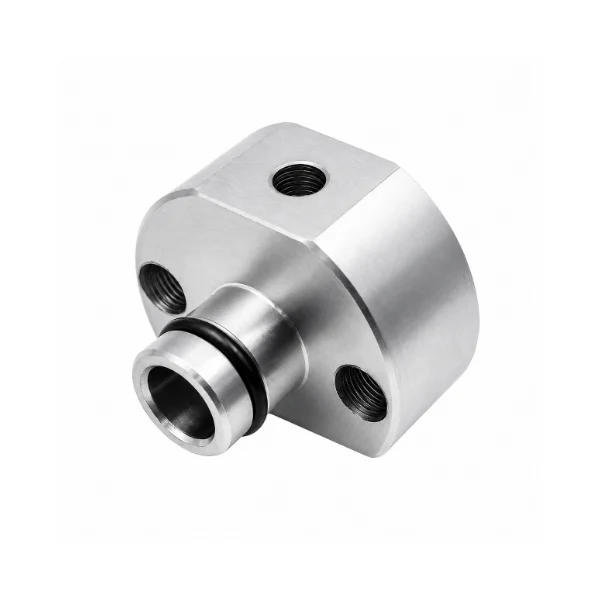
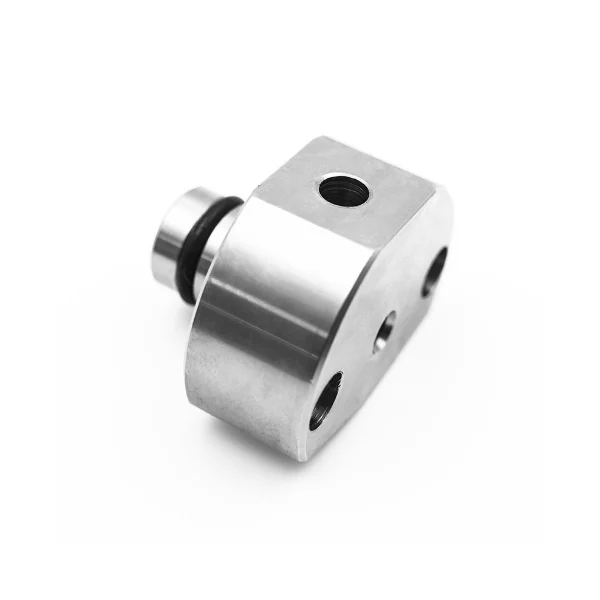
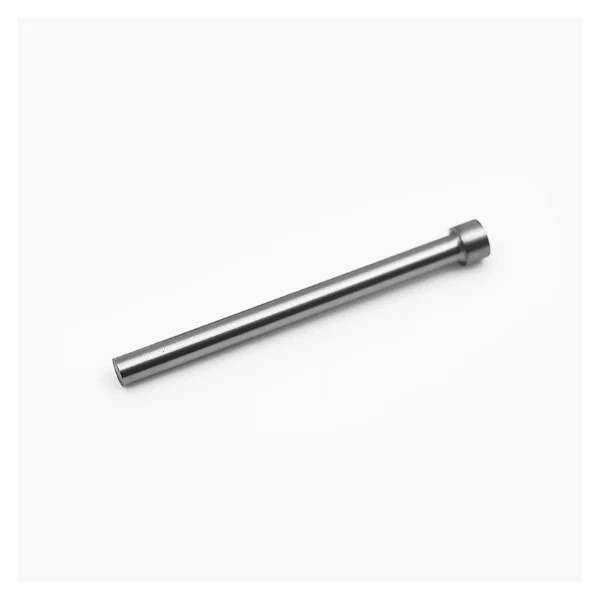
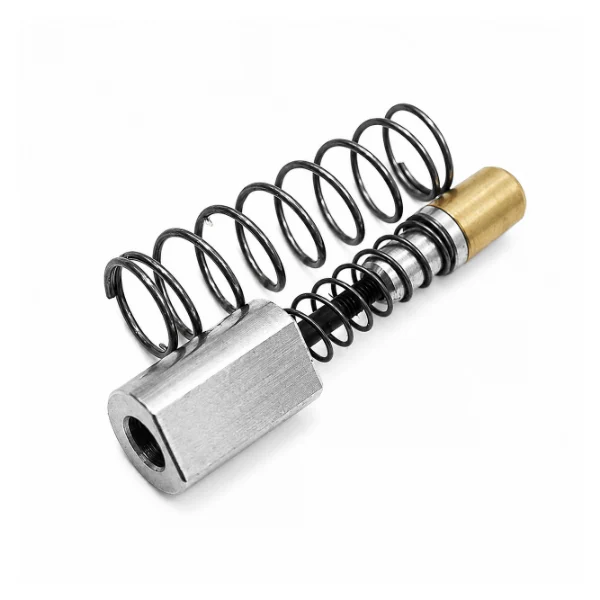
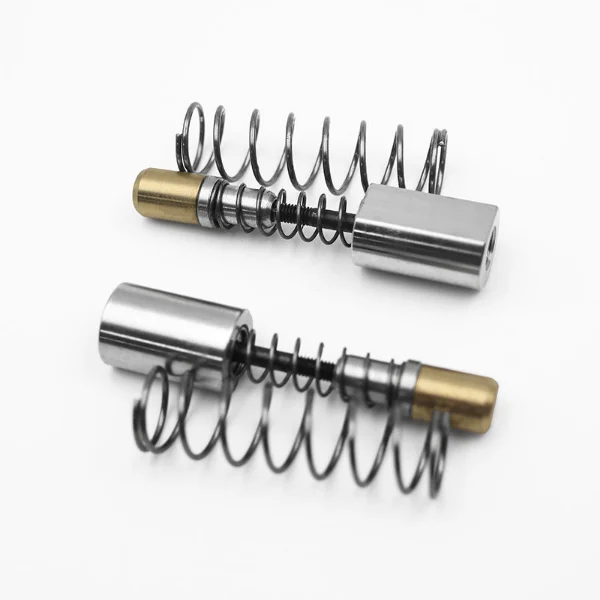
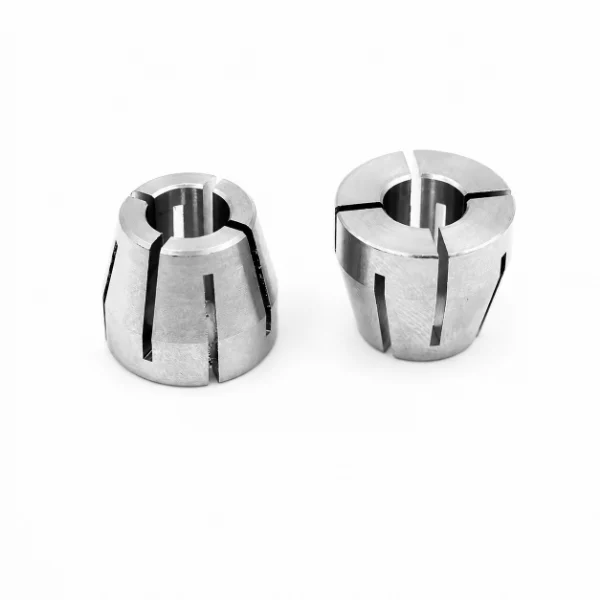
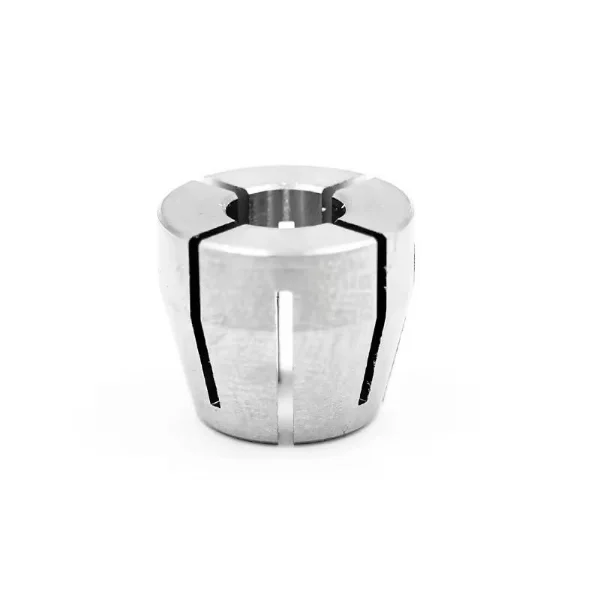
The illustrated component features a cylindrical inner bore, multiple longitudinal slots, and a tapered external profile. These structural features distinguish it from solid nozzle nuts and threaded connecting components.
Correct selection requires matching the collet's internal diameter, taper geometry, and overall dimensions to the existing cutting head assembly.
Key Features of the Mixing Tube Collet
01. Slotted Sleeve Construction
Multiple longitudinal slots divide the sleeve into flexible gripping sections. This structure allows the collet to contract when compressed by its corresponding retaining mechanism.
02. Tapered External Profile
The tapered outer surface is designed to engage with a compatible mating interface. The matching geometry converts axial tightening force into radial gripping action.
03. Precision Inner Bore
The central bore accommodates the mixing tube. Its diameter and contact condition are important for proper tube retention without excessive local pressure.
04. Replaceable Cutting Head Component
The collet can be evaluated as an individual replacement component when servicing compatible nozzle assemblies, helping maintenance teams identify the required part without automatically replacing the entire cutting head.
How Does a Mixing Tube Collet Work?
In a compatible waterjet cutting head, the mixing tube passes through the collet's central opening.
When the matching retaining nut is tightened according to the equipment manufacturer's procedure, the collet engages with the tapered mating surface. This produces inward gripping force around the mixing tube.
The gripping action helps hold the mixing tube in its intended position. Correct assembly also depends on the nozzle body, mixing chamber, retaining nut, and other positioning features.
The collet itself does not control abrasive feed, generate the waterjet, or act as a high-pressure sealing valve.
Critical Dimensions for Replacement Selection
A replacement collet must match the cutting head's clamping configuration. Similar-looking collets are not necessarily interchangeable.
Important dimensions include:
- Internal bore diameter
- Overall collet length
- Maximum and minimum external diameters
- Taper angle and contact length
- Slot arrangement and dimensions
- Compatibility with the retaining nut and mixing tube
Buyers should compare these details with the original component or approved technical drawing.
When Should a Mixing Tube Collet Be Replaced?
The condition of the collet should be inspected whenever the mixing tube is removed for maintenance.
A replacement may be required if the sleeve shows cracking, permanent deformation, damaged gripping surfaces, excessive bore wear, or difficulty maintaining the required tube position.
Uneven clamping or visible damage to the tapered surface can also indicate that the collet requires further inspection.
Before replacement, technicians should check the retaining nut and corresponding mating surfaces, since incorrect tightening or damaged associated parts can also affect the clamping arrangement.
Engineering Strength & Component Inspection
Precision Control for Split-Sleeve Collet Components
Mixing tube collets require particular attention to dimensional fit, slot condition, and contact geometry.
Unlike pressure-containing valve bodies or abrasive-flow mixing tubes, a collet primarily performs a mechanical gripping function.
KAD supports the supply of precision-machined cutting head components, with specification review focused on the following areas:
Inner Bore Inspection
The bore must correspond to the intended focusing tube dimensions. Incorrect sizing may lead to poor retention or excessive contact pressure.
Taper Surface Inspection
The external taper should match the corresponding mating interface. Surface damage, incorrect geometry, or uneven contact may affect clamping action.
Slot Geometry Inspection
Longitudinal slots should be checked for dimensional consistency, burrs, cracks, and visible machining defects.
Replacement Fit Verification
The original part reference, cutting head configuration, and mating dimensions should be reviewed before selecting an alternative collet.
Inspection limits and acceptance criteria must follow the approved drawing or relevant equipment specifications.
Why Choose KAD?
| Item | Specification |
|---|---|
| Product Type | Abrasive Inlet Nut & Clamp |
| System Type | Waterjet Cutting Head System |
| Function | Abrasive delivery & structural fixation |
| Working Pressure | Up to 60,000 PSI / 420MPa |
| Material | Stainless steel (corrosion-resistant grade) |
| Manufacturing Process | CNC precision machining |
| Feature | Stable clamping under vibration |
| Application | Industrial waterjet cutting systems |
1. Mixing Tube Installation
Used in compatible waterjet cutting head assemblies to hold the mixing tube in its intended mounting position.
2. Focusing Tube Replacement
Suitable for maintenance operations involving removal and replacement of worn abrasive focusing tubes.
3. Cutting Head Assembly Servicing
Used when inspecting or replacing the mechanical clamping components within compatible nozzle assemblies.
4. Collet and Retaining Nut Maintenance
Helps address component replacement needs when an existing collet has worn gripping surfaces or damaged geometry.
5. Waterjet Spare Parts Distribution
A replacement component category for distributors supplying parts to industrial waterjet equipment users.
6. Custom Replacement Part Identification
Original samples, technical drawings, and dimensional specifications can be submitted to evaluate replacement part requirements.
1. What is a mixing tube collet used for in a waterjet cutting head?
A mixing tube collet is designed to grip and retain the focusing tube inside a compatible waterjet cutting head. It works with a matching clamping arrangement to hold the tube in its intended position during equipment operation.
2. How is a mixing tube collet different from a nozzle clamp nut?
The collet is a slotted gripping sleeve that surrounds the mixing tube. The clamp nut or retaining nut is a separate fastening component that applies the force required to compress the collet. Both parts must match the relevant cutting head design.
3. How do I select the correct mixing tube collet size?
Check the mixing tube outer diameter, collet inner bore, overall length, external taper, and corresponding retaining nut. The original part number or technical drawing is usually the most reliable starting point.
4. Can I use the same mixing tube collet with different waterjet cutting heads?
Not necessarily. Different cutting heads may use different collet dimensions and clamping arrangements. Compatibility must be confirmed against the original equipment specifications before installation.
5. When should a waterjet mixing tube collet be replaced?
Replacement may be necessary if the collet is cracked, deformed, excessively worn, or unable to maintain the required tube position. Inspect the retaining nut and associated contact surfaces before determining the cause of a clamping problem.
6. What information is required for a bulk mixing tube collet quotation?
Please provide the required quantity, original part number, mixing tube diameter, cutting head manufacturer and model, and photographs or drawings if available. KAD can review these details to help identify the appropriate supply requirements.