


Waterjet Abrasive Mini Hopper – KAD-AP19 Compact Unit
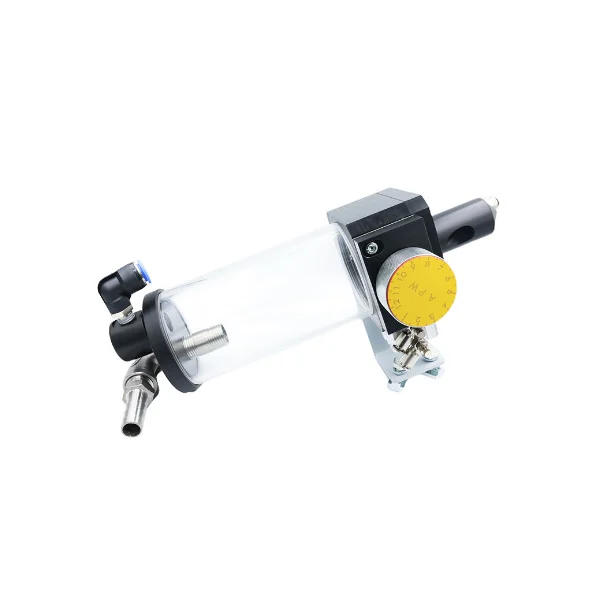
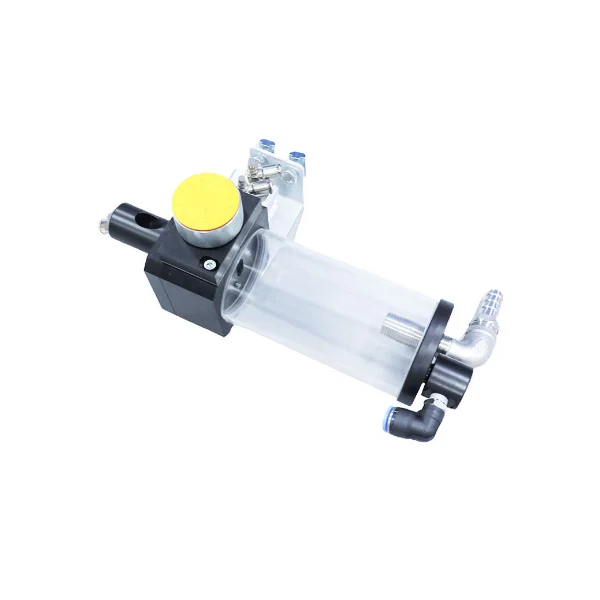
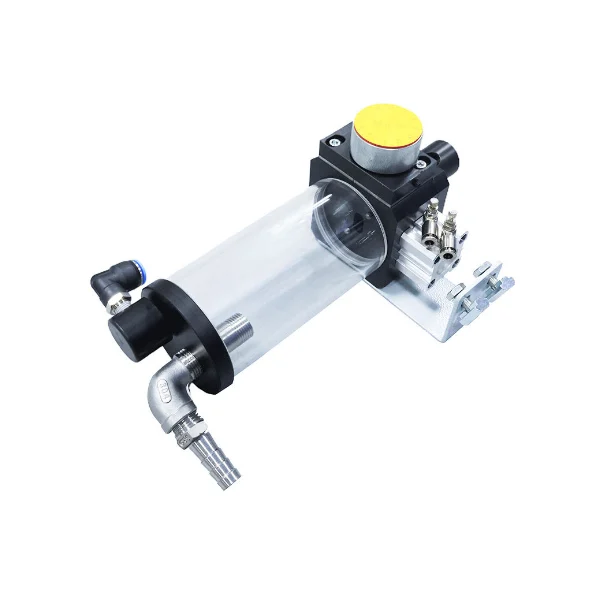
The Waterjet Abrasive Mini Hopper KAD-AP19 is a mini hopper designed to assemble into a compatible abrasive waterjet feeding system. This is a transparent cylindrical chamber with black end housings, metal connection fittings, a mounting bracket as well as a unique yellow circular piece. It is compact enough to be used for replacement evaluation when a replacement hopper assembly needs to be matched. Please check the Original Equipment model, connection scheme and mounting dimensions and the version of the components before ordering.
- Transparent Cylindrical Chamber
- Compact Hopper Assembly
- Multiple Connection Fittings
- Mounting Bracket for Installation
Share:


- Description
- Specification
- Application
- FAQS
Description – Compact Hopper Assembly and Component Structure
The KAD-AP19 abrasive mini hopper is a compact assembly associated with the garnet abrasive supply system of a compatible waterjet cutting machine.
Unlike large bulk abrasive storage tanks, this product has a relatively small transparent cylindrical chamber combined with end housings, metal fittings, and a mounting arrangement.
The transparent body provides a visible interior, while the attached components form part of the assembly's connection and installation structure.
KAD-AP19 should be selected as a complete component configuration rather than simply by matching the appearance of a transparent container.
For replacement requirements, the original equipment reference, port arrangement, mounting position, and overall dimensions should be checked.
Transparent Chamber and End Connections
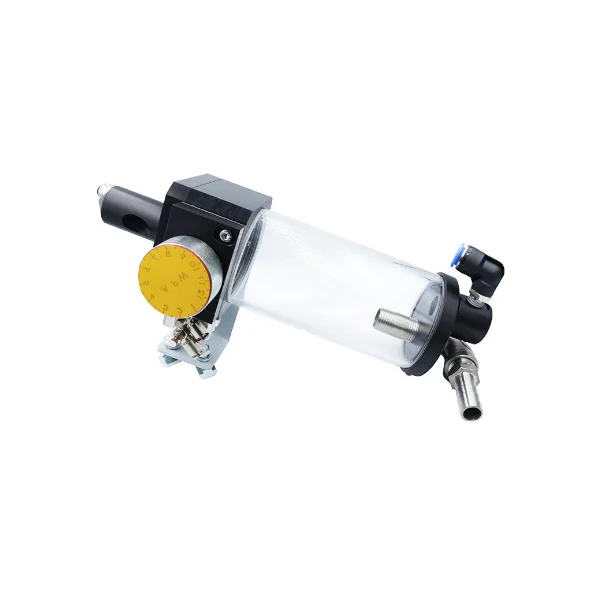
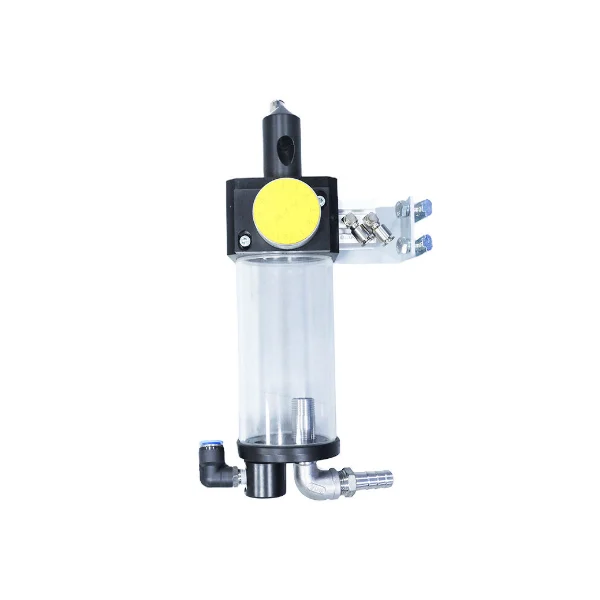
The product photographs show a clear cylindrical chamber positioned between dark-colored end components.
The transparent body allows the interior of the chamber to be viewed without disassembling the housing. Its actual storage capacity and permitted operating conditions must be confirmed from the product specification.
The end connections and attached fittings should be examined when identifying a replacement assembly.
Important checks include the chamber dimensions, connection positions, sealing interfaces, and condition of the transparent body.
Mounting Bracket and Connection Fittings
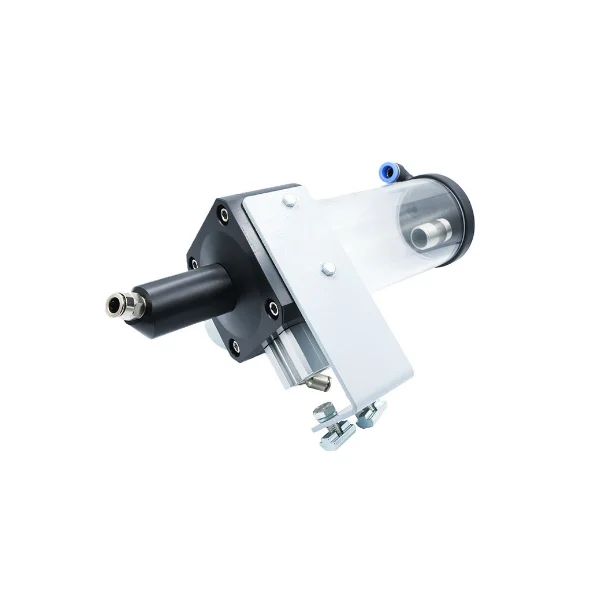
KAD-AP19 includes a metal mounting bracket and several visible connection fittings.
The photographs also show angled metal connectors and a push-in-style fitting, indicating that the connection arrangement is an important part of the product's configuration.
The exact function and size of each port must be verified against the original assembly.
For installation or replacement, buyers should compare the bracket dimensions, hole spacing, fitting orientation, and available equipment clearance.
Compact Assembly Identification
The AP19 product photographs show a distinctive yellow circular component attached to a black housing beside the transparent chamber.
This feature helps identify the photographed assembly, but its adjustment or control function should be confirmed before being described in technical specifications.
A visually similar hopper may have different end fittings, mounting positions, chamber dimensions, or accessories.
Customers should identify the required version using original equipment information and component photographs.
Engineering Strength & Component Inspection
1. Transparent Chamber Inspection
The clear cylindrical chamber should be inspected for cracks, discoloration, deformation, and visible surface damage. Chamber dimensions and material specifications should be compared with the original equipment requirements.
2. End Housing and Sealing Interfaces
The contact areas between the chamber and end housings are important assembly features. During maintenance, technicians should inspect the surrounding surfaces and confirm the condition and correct installation of any associated seals.
3. Connection Fitting Verification
The assembly includes multiple fittings that must match the intended connections. Port sizes, connector types, orientation, and mating components should be verified using the existing assembly or an approved drawing.
4. Bracket and Mounting Compatibility
The mounting bracket must correspond to the intended installation position. Hole spacing, bracket orientation, overall assembly length, and surrounding clearance should be checked before ordering a replacement.
Why Choose KAD for Abrasive Mini Hopper Parts?
| Item | Specification |
|---|---|
| Product Code | KAD-AP19 |
| Product Type | Abrasive Hopper / Sand Bucket |
| System Type | Abrasive Waterjet Cutting Machine |
| Function | Abrasive storage and feeding |
| Abrasive Type | Garnet sand |
| Feeding Method | Gravity feeding / assisted feeding |
| Structure | Storage tank with outlet control |
| Application | Waterjet abrasive delivery system |
1. Compact Hopper Assembly Replacement
KAD-AP19 can be evaluated as a replacement for a compatible compact hopper assembly used in waterjet abrasive feeding equipment.
The replacement should match the original chamber dimensions, connection layout, mounting arrangement, and component configuration.
2. Transparent Chamber Condition Inspection
During equipment maintenance, technicians can inspect the transparent chamber for visible damage, contamination, or deterioration.
Any replacement decision should take account of the manufacturer's maintenance guidance and the condition of the complete assembly.
3. Abrasive System Connection Maintenance
The mini hopper assembly includes fittings and mounting components associated with the equipment's feeding arrangement.
Technicians should inspect connections, seals, and mounting points when investigating assembly damage or suspected connection problems.
4. Equipment Maintenance and Rebuilding
Waterjet feeding system maintenance may involve removing and inspecting compact hopper components.
Before fitting a replacement, the original mounting position, connections, and component version should be verified.
5. Industrial Spare Parts Procurement
Waterjet equipment service providers and spare parts distributors can submit photographs, equipment references, dimensional information, and order quantities to request suitable mini hopper assemblies.
KAD can review available component information and discuss replacement sourcing or custom requirements.
1. What is a Waterjet Abrasive Mini Hopper?
A Waterjet Abrasive Mini Hopper is a compact component used in the abrasive supply system of compatible waterjet cutting equipment. The KAD-AP19 assembly shown on this page features a transparent cylindrical chamber, connection fittings, and mounting hardware. Its exact feeding configuration should be confirmed against the original equipment specifications.
2. How is a mini hopper different from a bulk abrasive hopper?
A mini hopper is a relatively compact component used within the abrasive supply arrangement, while a bulk abrasive hopper is designed for larger quantities of garnet abrasive. They can differ in storage capacity, installation position, connection design, and operating requirements. Buyers should select a replacement according to the actual equipment configuration.
3. What should I check when replacing a KAD-AP19 mini hopper?
Check the existing chamber dimensions, mounting bracket, connection fittings, port positions, and equipment model. Photographs of the original assembly are particularly useful for identifying the correct version. Compatibility should be verified before installation.
4. What is the purpose of the transparent chamber?
The transparent chamber allows the interior of the component to be visually observed without removing the housing. This can assist with routine inspection, although the chamber's material, operating limits, and permitted contents must be confirmed from the manufacturer's specification.
5. Can KAD-AP19 replace the KAD-TY101 abrasive hopper?
Interchangeability cannot be confirmed from the product names alone. The photographed KAD-AP19 and KAD-TY101 assemblies have different external configurations, connection arrangements, and mounting components. Buyers should compare the original equipment model and technical specifications before selecting either product.
6. What information is required for a KAD-AP19 quotation?
Provide the original equipment model, existing part reference, product photographs, mounting dimensions, connection specifications, and required quantity. If a custom configuration is needed, include drawings or samples and any available material or operating requirements.