


Waterjet Ruby Orifice – Multiple Housing Types for Replacement
KAD is a production unit supplier of Waterjet Ruby Orifice for compatible industrial water jet cutting system. Compact disc-type housings, raised-center profiles, tapered parts and extended-stems are included in the products shown. Each mode comes with a set jewal hole diameter and mounting. When replacing or ordering in bulk, the original part number, housing size, seating style and cutting head type should be all determined. KAD can assist industrial distributors and maintenance shops in finding the appropriate ruby orifice part for the various types of equipment configurations.
- Multiple Orifice Housing Profiles
- Fixed Jewel Aperture Size Options
- Original Part Number Matching
- Multi-Variant B2B Supply Support
Share:


- Description
- Specification
- Application
- FAQS
Description – Ruby Orifice Product Types and Housing Profiles
Ruby orifices are precision jewel components used to form high-velocity water streams in compatible waterjet cutting systems.
Although their basic jet-forming function is similar, ruby orifices are available with different metal housing structures and mounting interfaces.
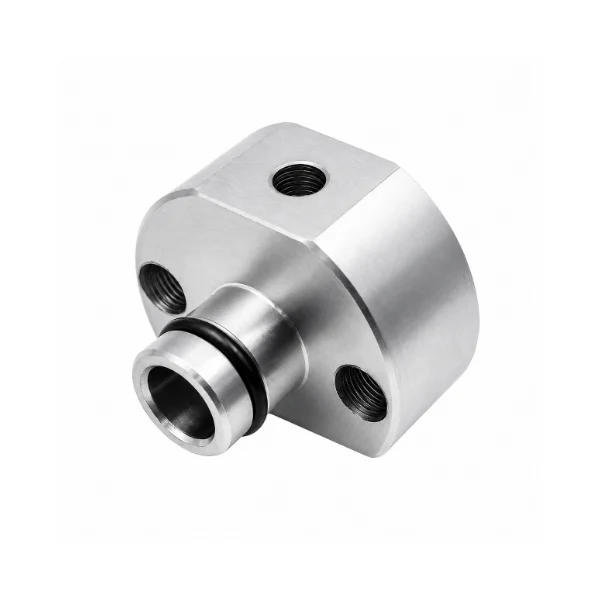
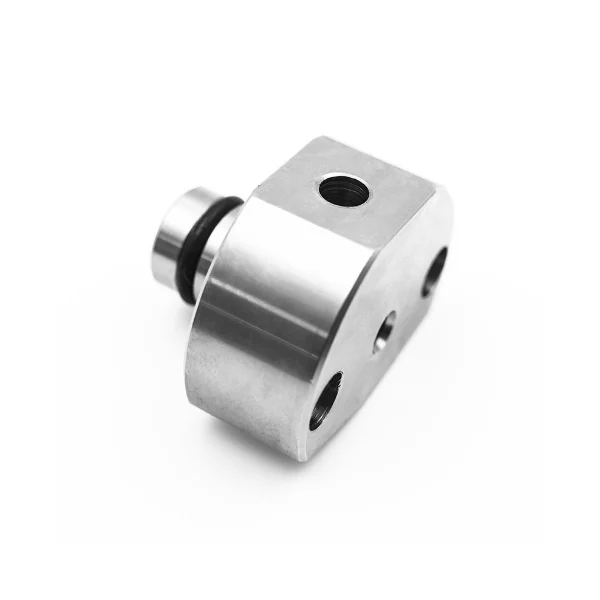
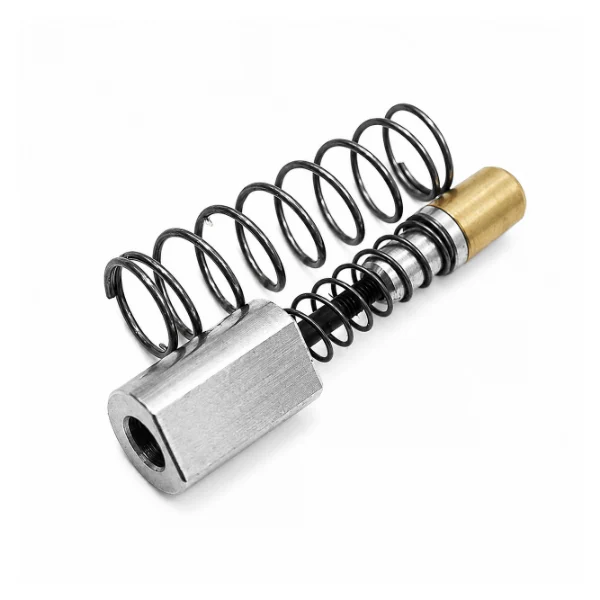
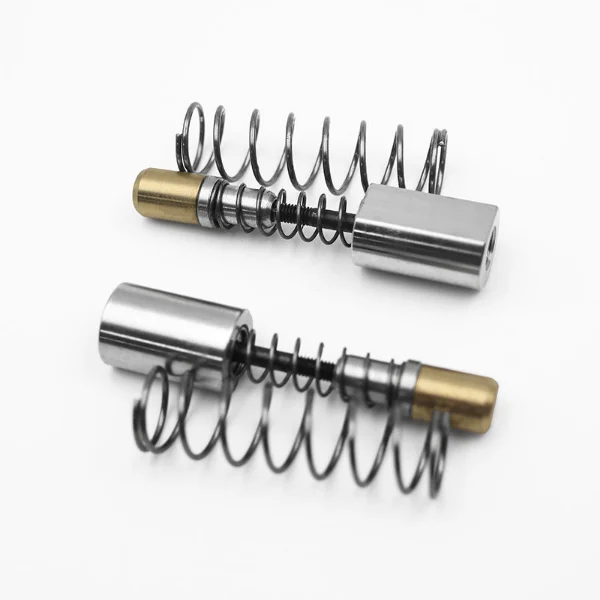
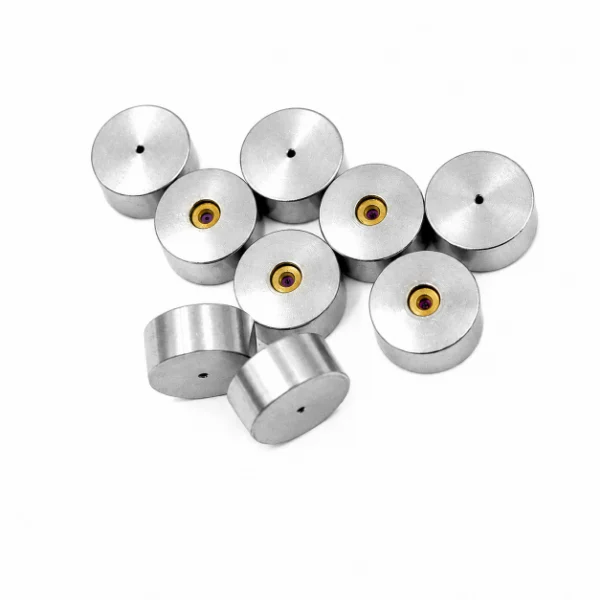
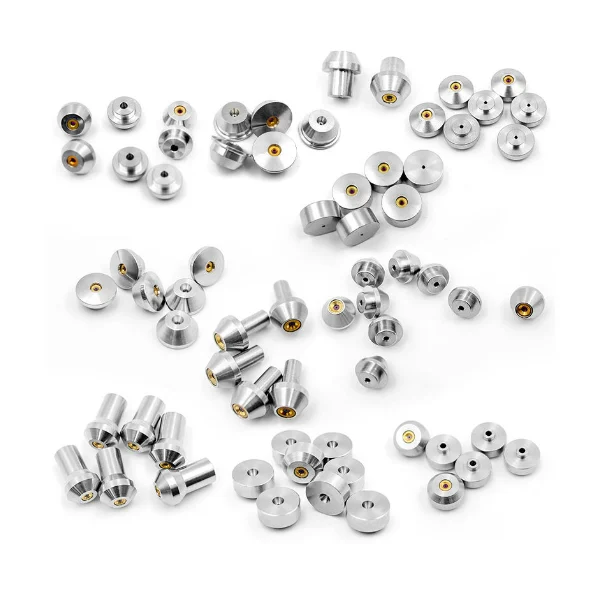
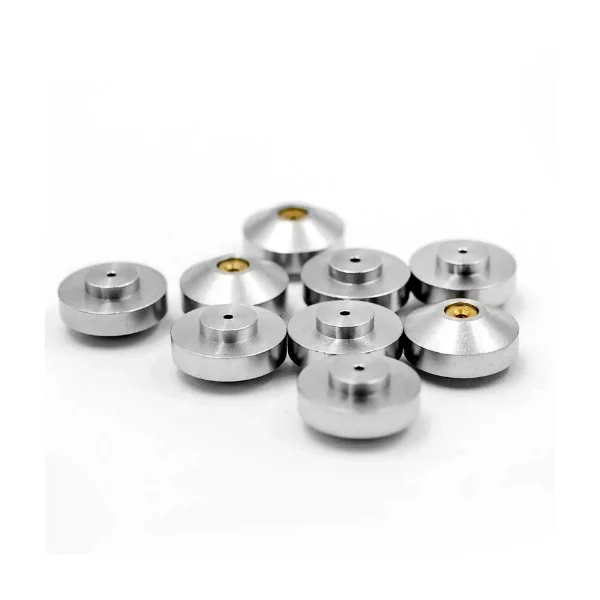
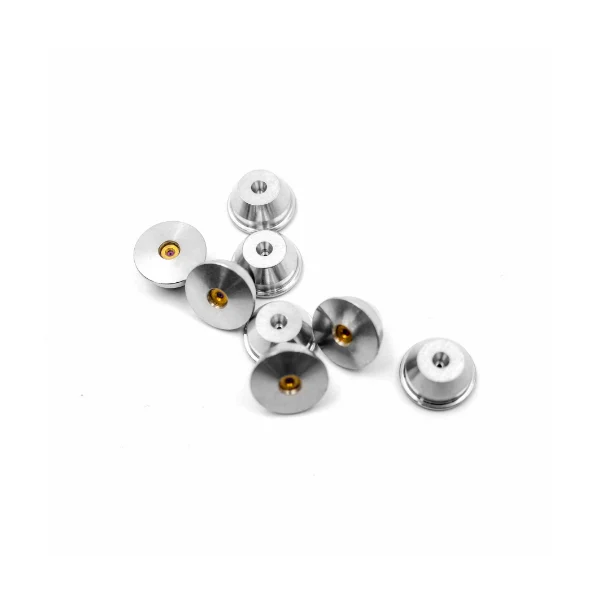
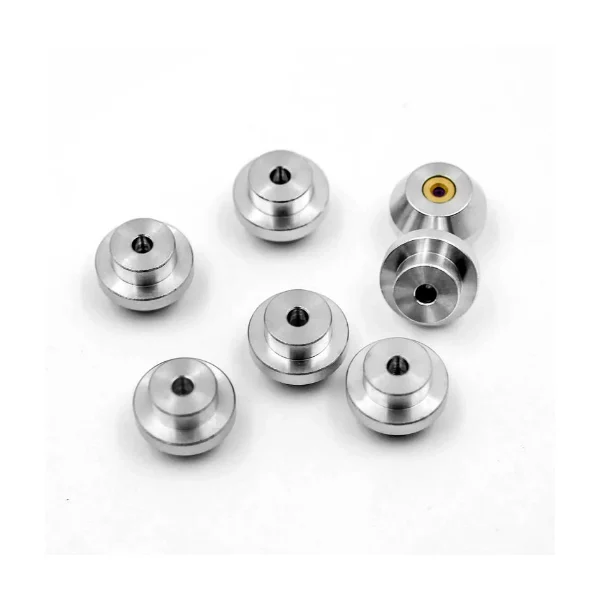
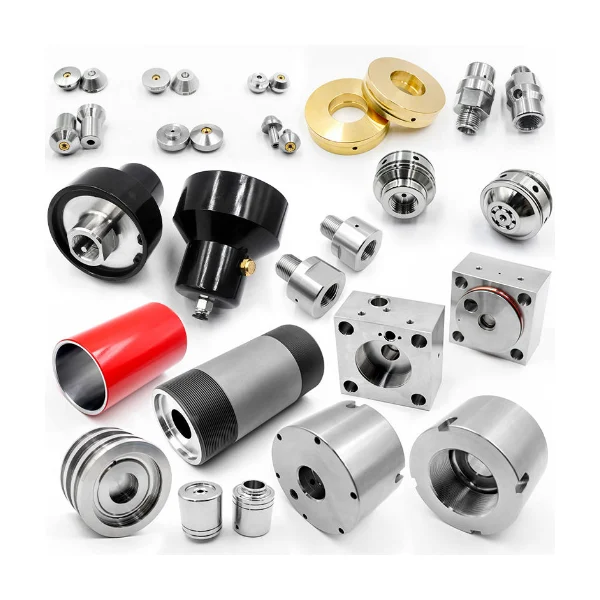
The KAD product photographs show several distinct housing profiles, including flat cylindrical bodies, raised-center designs, tapered mounting sections, and extended stems.
These structural differences are important when identifying replacement components.
A waterjet ruby orifice should not be selected solely according to the jewel aperture diameter or the visible color of its housing.
Instead, the original equipment model, housing design, orifice dimensions, and applicable part number should be considered together.
Extended-Stem Configurations
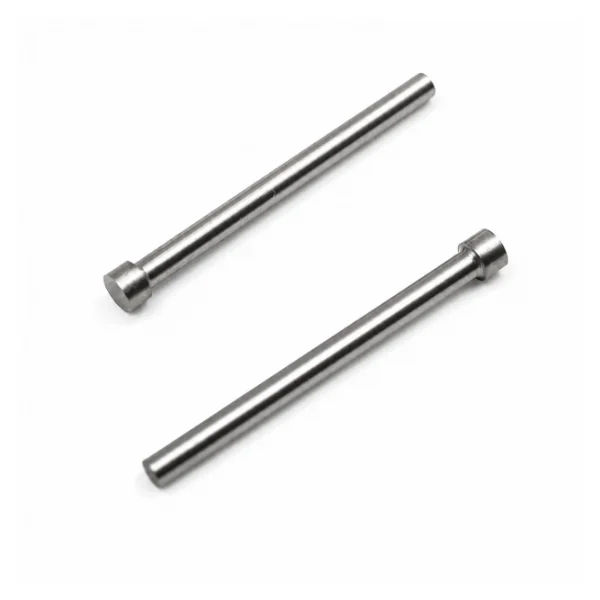
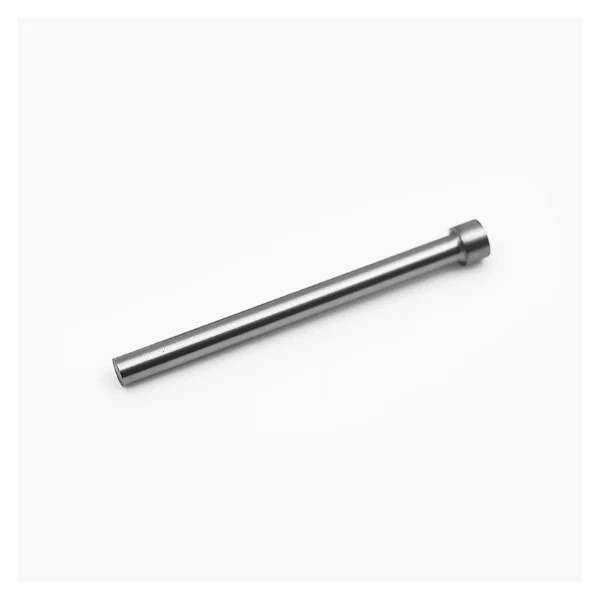
The gallery also includes orifice housings with extended cylindrical stems.
These components have different external dimensions from compact disc-style orifices.
The longer housing profile must correspond to the intended mounting arrangement.
Customers looking specifically for an extended-stem component should identify the original stem dimensions and compare them with the dedicated long stem ruby orifice specifications.
Different mounting styles should not be considered interchangeable merely because they use the same jewel aperture diameter.
Ruby Jewel Aperture Options
Ruby orifices are supplied with small, specified aperture diameters.
The KAD listing states a typical aperture range of 0.08–0.4 mm, although the available sizes for each housing configuration require confirmation.
Each individual ruby orifice has a fixed aperture size.
For accurate purchasing, the required aperture diameter should be recorded alongside the housing type and original part number.
A specified jewel size does not independently establish compatibility with a particular cutting head.
Waterjet Ruby Orifice Selection Matrix
Different mounting profiles require different replacement information.
The following table describes the visual housing groups represented in the product photographs. These descriptions are for preliminary identification only and do not establish standardized model compatibility.
| Housing Group | Visible Characteristics | Information to Verify |
|---|---|---|
| Disc-Style | Compact cylindrical body and central jewel area | Outside diameter, thickness, aperture size, seat |
| Raised-Center | Circular body with a protruding central boss | Boss diameter, boss height, housing dimensions |
| Tapered Housing | Conical or angled seating profile | Taper geometry, mounting seat, overall length |
| Extended-Stem | Longer cylindrical housing section | Stem length, outside diameter, seating configuration |
Customers should use the original manufacturer part reference and technical drawing to confirm the correct configuration.
How to Identify the Correct Replacement Part
Step 1 – Record the Original Part Number
Check the existing packaging, spare parts list, equipment documentation, or original manufacturer reference.
An exact part number helps distinguish components with similar external appearances.
Step 2 – Confirm the Cutting Head Model
Record the cutting head manufacturer, model, and any relevant holder or assembly information.
The cutting head reference is especially important when a machine uses a particular orifice mounting design.
Step 3 – Identify the Housing Type
Compare the existing component with the photographed disc-style, raised-center, tapered, or extended-stem structures.
Do not rely on appearance alone when confirming compatibility.
Step 4 – Specify the Aperture Diameter
Provide the fixed jewel aperture diameter required by the original equipment configuration.
An aperture size should be associated with a particular housing and part number.
Step 5 – Verify Installation Dimensions
Check overall length, housing diameter, seating geometry, and other dimensions specified in the original technical drawing.
Step 6 – Confirm Purchasing Requirements
For distributor orders and multi-machine maintenance requirements, specify the part reference, required configuration, aperture size, quantity, and any documentation requirements for each line item.
Why Choose KAD for Ruby Orifice Supply?
| Item | Specification |
|---|---|
| Product Type | Waterjet Ruby Orifice |
| System Type | Waterjet Cutting Machine |
| Function | High-pressure jet formation |
| Cutting Type | Pure waterjet / abrasive waterjet |
| Material | Ruby / sapphire / diamond alternative materials |
| Aperture Size | Micro precision (typical 0.08–0.4 mm) |
| Working Pressure | Up to 60,000 PSI / 420MPa |
| Manufacturing Process | Precision micro-drilling & polishing |
| Application | Industrial waterjet cutting systems |
1. Replacement Orifice Identification
Waterjet maintenance teams may need to identify an existing ruby orifice when replacing a damaged or unsuitable component.
The original part reference, aperture diameter, and housing geometry provide the starting point for matching a replacement.
2. Multi-Model Waterjet Spare Parts Stock
Companies operating different waterjet machines may require several ruby orifice designs.
Maintaining separate records for each part number, housing style, and aperture size helps prevent incorrect substitution between machines.
3. Distributor Inventory Planning
Waterjet spare parts distributors can organize ruby orifice products according to equipment compatibility, housing profile, fixed aperture size, and expected purchasing volume.
This approach makes it easier to prepare itemized quotations and repeat-order specifications.
4. Scheduled Orifice Replacement Procurement
Waterjet service companies may maintain a stock of approved replacement orifices for maintenance work.
Purchasing lists should identify the original part number and aperture specification required for each cutting head configuration.
5. Drawing-Based Replacement Evaluation
When an original part number is unavailable, customers may use a reference sample or dimensional drawing to help identify the required ruby orifice housing.
Dimensional matching alone does not establish full compatibility; the applicable material, seating, and operating specifications must also be verified.
1. Are all waterjet ruby orifices interchangeable?
No. Ruby orifices may share the same jet-forming function while using different metal housings, mounting profiles, and seating dimensions. Two products with identical aperture diameters may still be incompatible. Replacement selection should be based on the original part number, cutting head model, and approved component dimensions.
2. What different ruby orifice housing styles are available?
Waterjet ruby orifices may use compact disc-style housings, raised-center designs, tapered seating profiles, or extended stems, depending on the original equipment manufacturer. The KAD product gallery illustrates several of these shapes, but buyers should confirm which exact configurations and specifications are available for supply.
3. Can I identify a replacement ruby orifice from a photograph?
A clear photograph can help identify the general housing style, but it is not sufficient to confirm full compatibility. Important details such as aperture size, internal dimensions, seating geometry, and original manufacturer references may not be visible. Providing photographs together with measurements and equipment information produces a more reliable replacement inquiry.
4. Does the listed aperture range mean every housing style is available in every size?
No. The current KAD listing states a typical range of 0.08–0.4 mm, but this does not establish that every aperture diameter is available in every housing design. Each requested combination of housing type and fixed aperture size should be confirmed before ordering.
5. Can the same ruby orifice be used in pure-water and abrasive waterjet systems?
Some ruby orifice products may be suitable for both applications, depending on the cutting head and mounting arrangement. AccuStream, for example, identifies certain ruby orifices for both water-only and abrasive cutting. However, compatibility must be checked for the specific product, and the application category alone is not sufficient to confirm interchangeability.
6. How should a distributor prepare a bulk order for waterjet ruby orifices?
A bulk order should include a separate line item for each original part number, housing configuration, aperture size, and required quantity. The buyer should also provide applicable equipment models and any necessary dimensional or inspection specifications. An itemized purchasing list helps prevent confusion between visually similar ruby orifice variants.