





Technical Guide Collection of Waterjet Oil Seal Accessories
1.Waterjet Accessories: Design Requirements for Oil Seal Mounting Positions
Oil seals are commonly used in equipment with rotary sealing. To ensure stable operation and normal service life of oil seals, the oil seal mounting or matching positions on shafts or holes usually have special design requirements. 1. Design requirements for shafts at oil seal mounting positions. Before installing the oil seal, the design of the shaft and cavity housing hole of the equipment shall be verified reasonable. The shaft surface that slides against the sealing lip of the seal…
2.Waterjet Accessories: Key Production Processes of Seals
Two major labor-intensive and cost-increasing procedures dominate seal production: 1. Vulcanization; 2. Inspection. 1. Rubber Material Preparation Section. Main procedures: Raw Material – Incoming Inspection – Batching – Mixing – Filtration – Vulcanizing Agent Addition – Rubber Inspection – Preforming. After raw materials pass incoming inspection, batching and mixing can proceed. Open mills or internal mixers can be selected for mixing according to production demands…
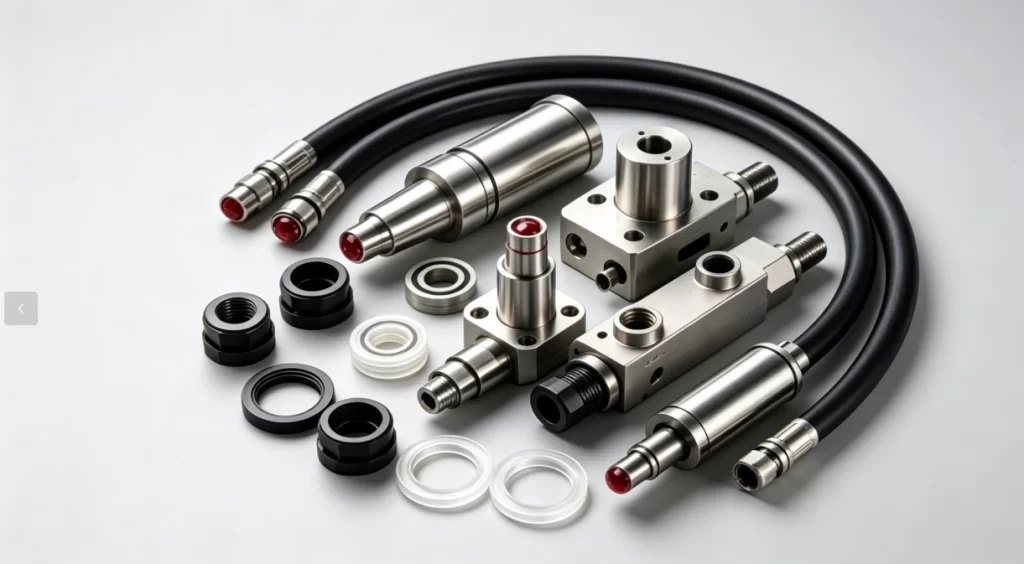
3.Waterjet Accessories: Correct Installation Methods of Oil Seals
Oil seals are mechanical sealing elements, also known as rotary shaft lip seals. Oil penetrates friction parts during machine operation, and oil seals are applied to prevent oil leakage from machine gaps. The most common type is the skeleton oil seal. Below are standard installation methods. 1. Installation of oil seals in housing holes. Before assembly, inspect the inner wall of skeleton oil seals for debris, scratches, dust, casting sand, etc. Install skeleton oil seals with special tooling…
4.Waterjet Accessories: How to Classify Oil Seals? Which Materials Produce High-Quality Oil Seals?
Oil seal is the common term for rotary shaft seals, simply defined as seals for lubricating oil. As mechanical sealing components, oil seals separate lubricated transmission parts from output parts to avoid lubricant leakage. Two typical types: skeleton oil seals (double-layer seals fully wrapped in rubber with self-tightening springs) and power oil seals with iron shells. Oil seals are applied at all joints connecting lubricant-filled rotating housings to the outside…
5.Waterjet Accessories: Installation Methods of Check Valves
This article discusses the installation positions of check valves. How to confirm the mounting position of check valves? What are the differences between installing check valves before and after pumps, and what scenarios suit pre-pump installation? Check valves are often used together with other valves, so where to mount them in such combined piping systems? Let’s analyze this in detail. Also known as non-return valves, check valves are automatic valves that operate relying on the fluid medium flowing inside pipelines…
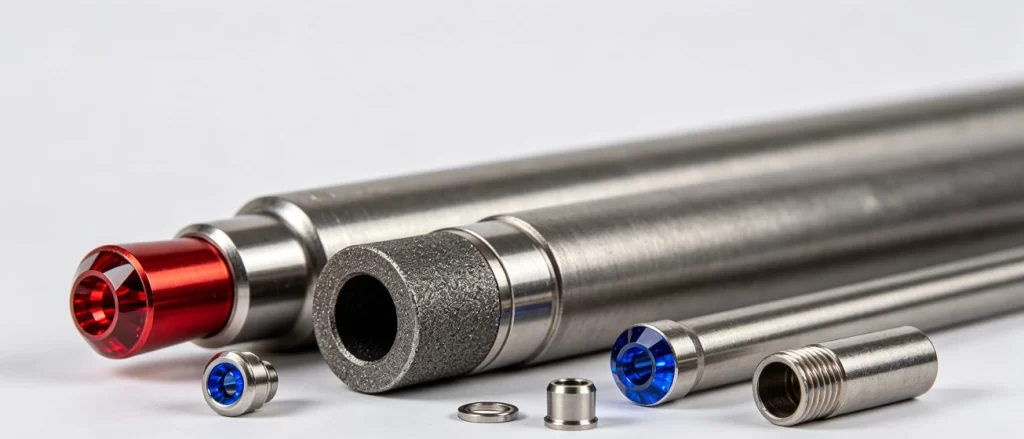
6.Waterjet Accessories: Faults & Maintenance of One-Way Valves
One-way valves are the core component of liquid pumps, guaranteeing high pressure and stable flow rate output. Therefore, zero malfunction is required during operation. However, failures frequently occur in practical application, most of which originate from one-way valves. Root causes include internal defects (wear, aging, etc.), improper operation & maintenance, and sudden accidental damage…
7.Waterjet Accessories: Structure & Working Principle of One-Way Valves
One-way valves feature the simplest structure and operating logic among all hydraulic components, yet they are indispensable for every hydraulic system with straightforward and decisive fluid control. Structure & Working Principle: One-way valves allow oil to flow forward and block reverse flow (similar to diodes in circuits). Based on spool structure, they are categorized into ball valves and poppet valves. Ball type boasts simple structure and easy manufacturing…
8.Waterjet Accessories: Classification of Check Valves
Check valves are designed to prevent medium backflow in pipelines; foot valves and duckbill valves also belong to the check valve family. Check valves fall into three main types: lift type, swing type and wafer type. (1) Lift type includes vertical and horizontal subtypes, whose spool moves along the central axis. Example: Silent lift check valves are applied in high-standard water supply & drainage pipelines, and can also be installed at pump outlets for PN2.5 pressure grade…
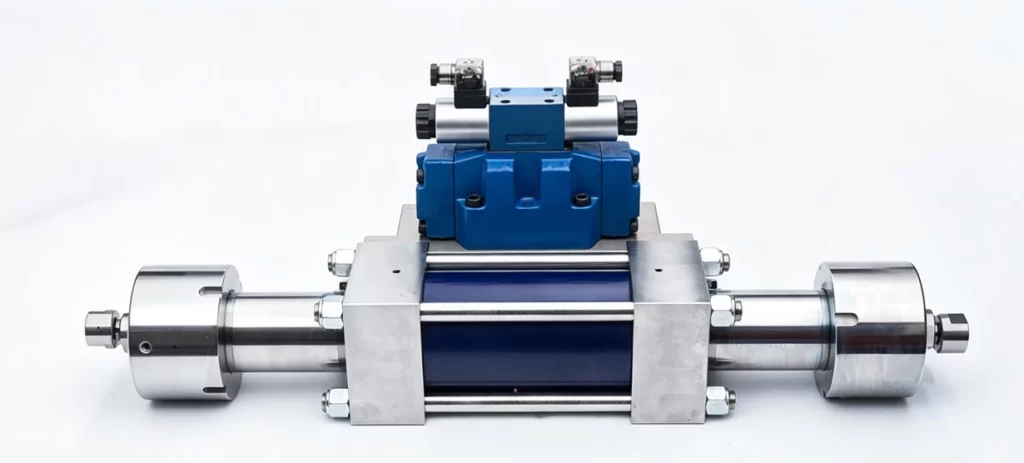
9.Waterjet Accessories: Differences & Applications Between Check Valves and One-Way Valves
Check valves only guide unidirectional water flow and cannot effectively prevent backflow contamination. This is the core criterion for selecting between check valves and pipeline backflow preventers. Backflow preventers integrate the functions of check valves, while ordinary check valves cannot replace backflow preventers. If a backflow preventer is installed, additional check valves are unnecessary. Check valves are required under the following conditions: 1. For pipelines directly connected to municipal water supply mains…
10.Waterjet Accessories: Working Principle of Hydraulic One-Way Valves
Hydraulic one-way valves enable reverse fluid flow by regulating control oil pressure, and they play a vital role in hydraulic support equipment for mining machinery. Different from standard one-way valves, they are equipped with an extra control oil circuit K. When no pressure oil enters the control circuit, they operate as standard one-way valves: oil flows only from inlet to outlet with reverse flow blocked. Once pressure oil is fed into the control circuit, the piston push rod will be driven by hydraulic force…
